English
 中文
中文 Русский
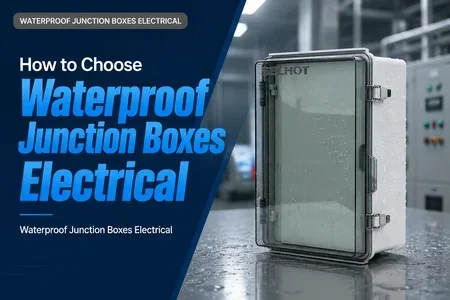
Article Overview: Selecting the right Waterproof Junction Boxes Electrical goes beyond comparing IP ratings. This article provides an objective framework for evaluating mechanical strength, chemical resistance, sealing integrity, terminal layout, and installation ergonomics. Procurement teams and technical architects will learn to match enclosure specifications to real-world operating conditions and avoid common performance pitfalls.
What Defines a Waterproof Junction Box Beyond the IP Rating?
An IP66 or IP65 rating guarantees ingress protection against dust and water jets, but it does not capture several factors that determine long-term performance in industrial environments. Engineers often cite IP rating as the primary selection criterion, yet failures frequently trace back to overlooked parameters.
- Mechanical impact resistance: A box rated IP66 may still crack under a 10 J impact if the material lacks sufficient toughness.
- UV and oxidation stability: Polycarbonate (PC) resists UV degradation longer than standard ABS, which can yellow and embrittle after two to three years in direct sunlight.
- Chemical exposure tolerance: Halogen-free thermoplastics offer superior resistance to oils, solvents, and cleaning agents commonly found in food processing or chemical plants.
For example, a waterproof junction box installed in a coastal chemical plant might pass initial IP66 tests but fail within 18 months if the housing material is not corrosion-resistant and UV-stabilized. Buyers should request material datasheets that include Izod impact strength, UL 746C weathering, and chemical immersion test results.
How Do Material Choices Impact Long-Term Durability?
Selecting the right material is critical for ensuring that a Junction Box withstands environmental stress. The table below compares three common enclosure materials across key performance parameters.
| Property | ABS Plastic | PC Plastic | Halogen-Free Thermoplastic |
|---|---|---|---|
| Impact Strength (Izod 23°C) | Moderate (~200 J/m) | High (~600 J/m) | High (~500 J/m) |
| UV Resistance | Poor (requires coating) | Excellent (inherent) | Good (UV-stabilized) |
| Chemical Resistance | Low (susceptible to solvents) | Moderate (resists oils) | High (resists acids, alkalis) |
| Operating Temperature Range | -20°C to 80°C | -40°C to 120°C | -30°C to 110°C |
| Relative Cost | Low | Medium | Medium-High |
Material Selection Guidance
Option A: ABS Plastic
Cost-effective, good impact resistance at room temperature, but limited UV and chemical resistance. Suitable for indoor or sheltered outdoor use where temperature extremes and chemical exposure are minimal.
Option B: PC Plastic
Broad operating temperature range (-40°C to 120°C), high impact strength, inherent UV resistance, and self-extinguishing flammability rating. PC is often halogen-free depending on the formulation, and meets stringent environmental standards.
Option C: Halogen-Free Thermoplastic Blends
These blends (e.g., PC/ABS or PC/PBT) provide enhanced chemical resistance, low smoke emission, and no halogen-based flame retardants. Often specified for railway, marine, or medical applications where fire safety and low toxicity are critical.
Buyer note: Request actual test reports for each candidate material rather than relying on generic “ABS” or “PC” labels. Impact strength at low temperature (-20°C) can vary by 30% between suppliers.
How to Evaluate Sealing Integrity and Gasket Design?
The gasket is the most common failure point in waterproof junction boxes. A high IP rating does not guarantee long-term seal performance if the gasket material, compression design, or installation procedure is inadequate.
Step 1: Identify the environmental contaminants
Determine whether the box will face water spray, steam cleaning, dust, corrosive gases, or temperature cycling. Each contaminant type stresses the gasket differently.
Step 2: Check gasket material compatibility
EPDM gaskets excel in UV and ozone resistance but may swell in oils. Silicone gaskets tolerate extreme temperatures but can tear under repeated clamping. Neoprene offers a balanced choice for most industrial scenarios.
Step 3: Assess the compression design
A labyrinth-style seal with a continuous compression lip retains integrity after many open/close cycles. Hinged lid designs with over-center latches provide consistent gasket compression without over-torquing screws.
Seal integrity is not merely a function of IP rating—it depends on gasket cross-section, durometer, and the clamping mechanism. Ask suppliers for accelerated aging test data (e.g., heat aging at 100°C for 1000 hours followed by IP testing).
Why Does Terminal Layout Matter for Long-Term Reliability?
Internal organization of terminals directly affects ease of installation, maintenance frequency, and heat dissipation. A poorly laid out junction box forces wire bending, increases the risk of shorts, and traps heat.
- Terminal spacing: Adequate spacing between live parts prevents tracking and makes re-wiring safer. For high-voltage circuits (>600 V), minimum 8 mm clearance per IEC 60947-1 is typical.
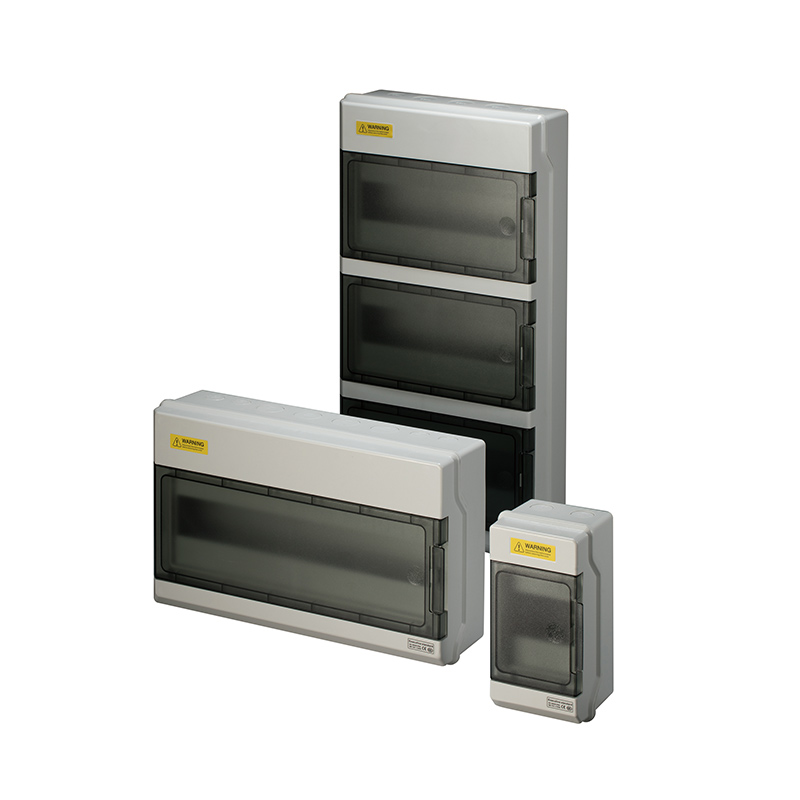
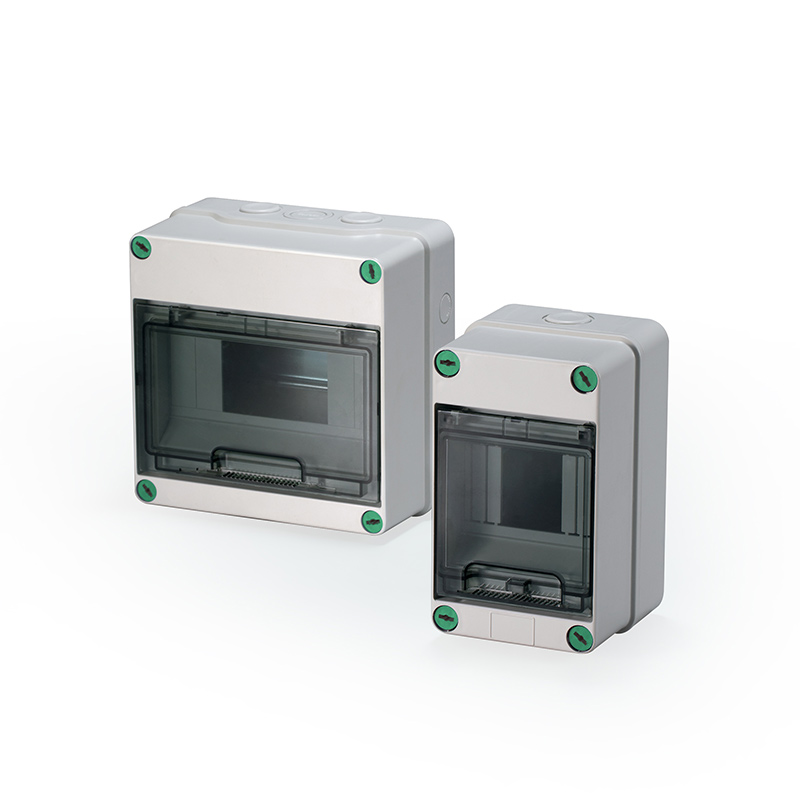
- Hinged vs. screw-on lid: Hinged designs allow hands-free access during commissioning and troubleshooting. Clamshell lids (as offered in many IP66 external junction boxes) eliminate loose covers that can be lost or incorrectly reseated.
- Internal grounding studs: Pre-installed grounding points reduce installation time and ensure consistent bonding. Verify that studs are corrosion-resistant and rated for the system fault current.
Installation tip: For boxes with pre-molded knockouts, check that the knockout tool does not deform the enclosure edge. Many Waterproof Junction Boxes Electrical use a clean-break design that leaves a smooth, gasket-compatible surface.
FAQ
Can I use an IP65 junction box outdoors in a tropical climate?
IP65 protects against low-pressure water jets but may not withstand heavy rain combined with wind-driven rain. In tropical regions with frequent downpours, IP66 or higher is recommended. Additionally, material must resist UV and high humidity—PC is preferable over ABS in such climates.
How do I verify if a waterproof junction box is truly halogen-free?
Request a halogen content test report per IEC 61249-2-21 or similar standard. Look for statement “< 900 ppm total halogens” (with < 900 ppm each of chlorine and bromine). Some suppliers market “halogen-free” but still use halogenated flame retardants; independent test reports remove ambiguity.
What is the difference between a junction box and a distribution box?
A junction box typically houses wire connections and splices, while a distribution box contains circuit breakers or fuses for branch circuits. The mechanical requirements (IP rating, impact resistance) are similar, but distribution boxes often need additional ventilation if breakers generate heat. For more on junction box specifics, see the Junction Box Faq page.
Do I need a separate internal ground when using a plastic enclosure?
Yes. Plastic enclosures are non-conductive, so a dedicated grounding conductor must be connected to all metallic parts inside (e.g., DIN rails, terminal blocks). Ensure the enclosure has a bonded grounding stud or bar.
Conclusion
Selecting Waterproof Junction Boxes Electrical requires a systematic evaluation beyond the IP code. Material strength, gasket integrity, terminal layout, and environmental compatibility each play a decisive role in overall reliability. By applying the decision framework and comparison criteria outlined here, procurement teams and technical architects can reduce field failures, lower total cost of ownership, and ensure their junction box solution aligns with actual operating conditions. Always request test data and material certifications from your supplier before finalizing specifications.