English
 中文
中文 Русский
Article Overview: This article explains the function and importance of the rotary load isolation switch in photovoltaic (PV) systems, with a focus on safety requirements such as visible isolation and arc quenching. It also examines how Commercial Solution designs incorporate these switches for reliable DC-side operation. The content is intended for technical and procurement professionals involved in PV system specification.
What is a Rotary Load Isolation Switch?
A rotary load isolation switch is a manually operated switching device designed to safely disconnect electrical circuits under load conditions. Its primary function is to provide a visible air gap that ensures complete isolation of the circuit for maintenance or emergency shutdown. Unlike circuit breakers, isolation switches are not intended for overcurrent protection but focus on reliable disconnection and safety.
The switch uses a rotary mechanism to move the contacts apart, creating a defined isolation gap. This design allows operators to visually confirm the open state, which is crucial for lockout/tagout procedures. The rotary load isolation switch is especially valuable in DC systems where arc extinguishing is more challenging due to the absence of a natural current zero crossing.
Step 1: Actuating the Handle
The operator turns the rotary handle, which mechanically drives the contact assembly.
Step 2: Contact Separation
The moving contacts separate from fixed contacts, creating an arc that must be extinguished quickly.
Step 3: Arc Quenching
In DC switches, a magnetic blowout or arc chamber stretches and cools the arc until it extinguishes.
Step 4: Visible Isolation Gap
Once fully open, a distinct air gap is visible through inspection windows or indicator markings, confirming safe isolation.
Why is the Rotary Load Isolation Switch Critical for PV Systems?
Photovoltaic systems operate with high DC voltages (often 600V to 1500V) and sustained fault currents. Unlike AC, DC arcs do not self-extinguish every half cycle, making arc extinction more difficult and hazardous. The rotary load isolation switch is purpose-built for this environment, offering robust arc quenching and reliable isolation.
Key benefits in PV applications include:
- Visible isolation: Confirms circuit is de-energized for maintenance.
- Mechanical interlocking: Prevents operation under unsafe conditions (e.g., closing when a ground fault exists).
- DC-rated arc extinguishing: Specialized contact design handles sustained DC arcs.
- Durability: Designed for frequent switching in outdoor environments with IP65 or higher enclosures.
Without a proper isolation switch, technicians risk arc flash incidents and equipment damage. National electrical codes (e.g., NEC 690) mandate isolation means for PV systems, and the rotary load isolation switch fulfills this requirement effectively.
How Does Mechanical Interlocking Improve Safety?
Mechanical interlocking is a safety mechanism that enforces operational sequence constraints through mechanical design. In the context of a rotary load isolation switch, interlocking ensures that the switch cannot be operated when it would create an unsafe condition—for example, preventing the switch from closing unless the upstream disconnect is open.
This is achieved through physical linkages between the handle and other components (e.g., door interlock, padlock provisions). When applied in a Commercial Solution enclosure, the interlocking protects personnel from accidental contact with live parts during maintenance.
Phase 1: Pre-Operation Check
The interlock verifies that the enclosure door is closed before the switch can be turned to ON.
Phase 2: Interlock Engagement
Once the switch is ON, the door cannot be opened—preventing access to energized parts.
Phase 3: Isolation Sequence
To open the door, the switch must be turned to OFF, creating a visual air gap.
Phase 4: Lockout Capability
A padlock can be applied to the switch handle to secure the OFF position during maintenance.
This mechanical interlocking reduces the risk of human error and is a fundamental feature in safety-certified isolation switches.
Rotary Load Isolation Switch in Commercial Solutions
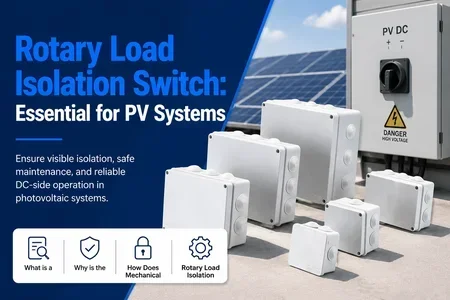
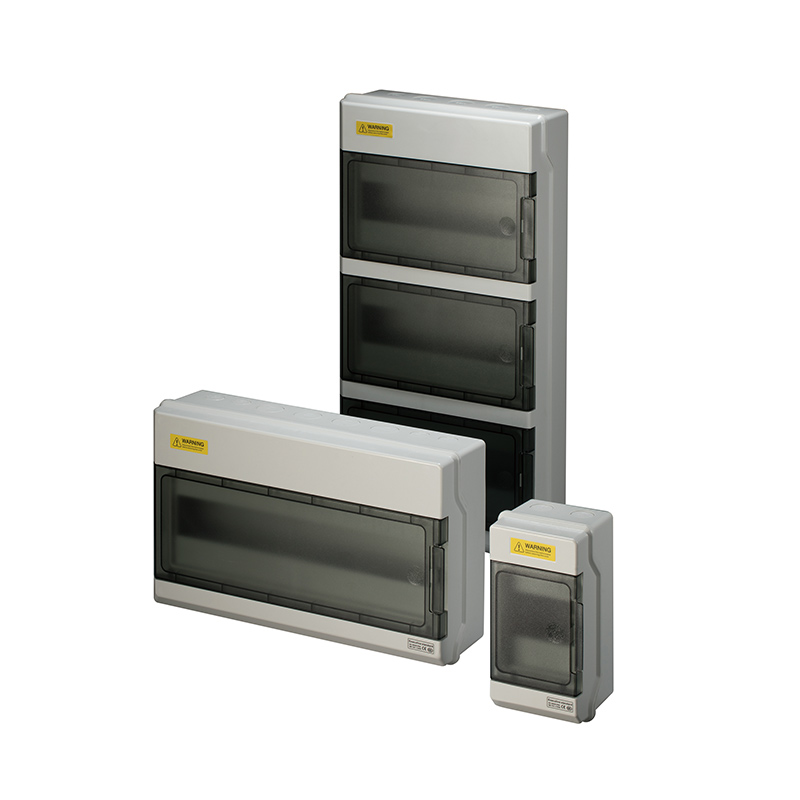
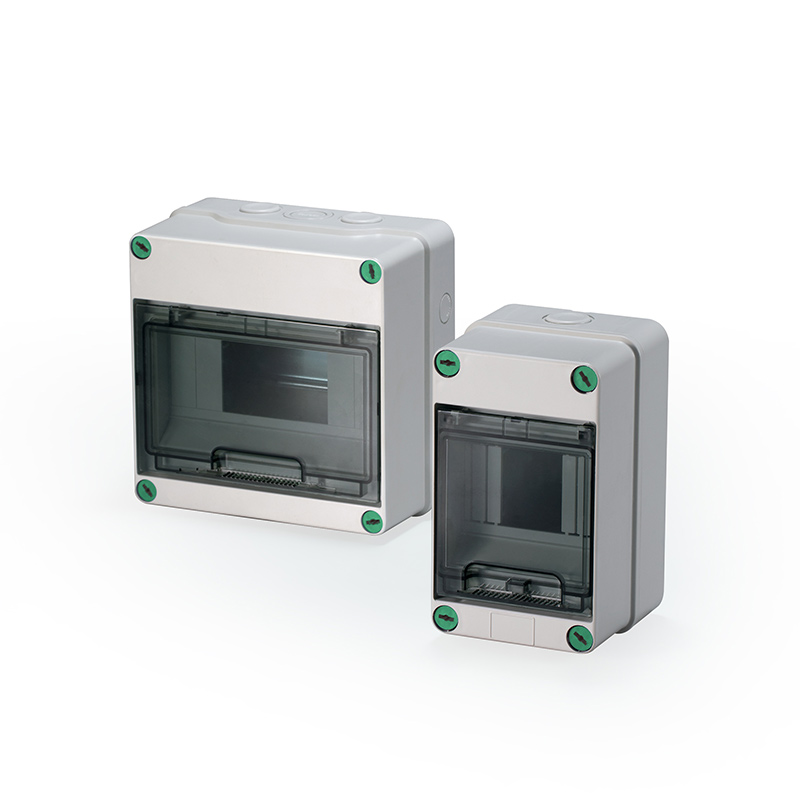
For commercial PV installations, the rotary load isolation switch is often integrated into distribution boxes or junction boxes as a central safety component. The switch must be rated for the system voltage and current, and its enclosure should meet the required ingress protection (IP) level for outdoor use. Common applications include:
- String-level isolation on the DC side of inverters.
- Main disconnect for PV arrays in commercial rooftops.
- Emergency shutdown for solar carports and ground-mount systems.
- Integration with monitoring and control systems for remote disconnection.
Selecting the right switch involves evaluating DC ratings, ambient temperature range, and the number of operations expected over the system life. Procurement teams should verify certifications (e.g., IEC 60947-3, UL 98) relevant to the target market.
FAQ
What is the difference between a rotary isolation switch and a circuit breaker?
A circuit breaker provides overcurrent protection and can interrupt faults automatically, while an isolation switch is manually operated and designed solely to provide visible disconnection for safe maintenance. Isolation switches do not have trip mechanisms.
Can a rotary load isolation switch be used in AC applications?
Yes, many rotary load isolation switches are rated for both AC and DC, but the ratings differ. Always verify the voltage and current ratings for the specific application (AC or DC) to ensure safe operation.
Why is mechanical interlocking important for safety?
Mechanical interlocking forces a safe operating sequence—such as preventing door access while the switch is on—reducing the risk of arc flash or electric shock during maintenance.
How do I choose the right rotary load isolation switch for a PV system?
Consider system voltage (e.g., 1000V DC or 1500V DC), continuous current, short-circuit capability, enclosure IP rating, and operational frequency. Ensure the switch has relevant certifications for your local electrical code.
Conclusion
The rotary load isolation switch is a cornerstone of safety in photovoltaic systems, providing visible isolation and reliable DC arc extinguishing. Its mechanical interlocking enhances operator protection, making it an essential component for commercial PV installations. By understanding the switch's function and integration into broader system safety strategies, engineering and procurement teams can make informed decisions that align with regulatory requirements and operational needs.