English
 中文
中文 Русский
Article Overview: This guide provides an objective comparison of rotary load isolation switches for engineers and procurement professionals. We examine specification differences, performance tradeoffs, and decision criteria to help you select the right Load Isolation Switch for your application. The focus remains on core product categories: Rotary load isolation switch, Load Isolation Switch, and Rotary Isolator Switch.
How Do Rotary Load Isolation Switches Differ from Standard Switches?
Rotary load isolation switches are designed to provide a visible air gap and positive break indication, ensuring safe isolation of electrical circuits during maintenance. Unlike standard switches, they incorporate mechanical interlocking to prevent accidental operation under load and often include padlockable handles for lockout/tagout compliance. The switching mechanism uses a rotary motion to open or close contacts, offering durability and reliable performance in demanding industrial environments. Understanding these fundamental differences is the first step in comparing products from different manufacturers.
Key distinctions include:
- Breaking capacity: Rotary load isolation switches are rated to switch load currents (e.g., 20A–630A at 400V AC), while standard switches may only be rated for isolation.
- Operational cycles: Heavy-duty rotary isolators often exceed 10,000 mechanical operations, reducing replacement frequency.
- Enclosure ratings: Many rotary switches come in IP65 or higher enclosures for harsh environments, unlike basic switches.
When comparing a Load Isolation Switch, Rotary Isolator Switch, always verify the rated operational current, voltage, and utilization category (e.g., AC-23A for motor switching).
What Are the Key Specifications to Evaluate When Comparing Rotary Load Isolation Switches?
Selecting the right Rotary load isolation switch requires careful analysis of technical parameters. Below are critical specifications that directly impact performance and safety.
| Specification | What to Look For | Tradeoff/Caution |
|---|---|---|
| Rated Impulse Withstand Voltage (Uimp) | ≥6 kV for most industrial circuits | Higher ratings increase cost but improve surge immunity |
| Short-Time Withstand Current (Icw) | Minimum 1 kA for 1 second per IEC | Lower values risk contact weld during faults |
| Number of Poles | 3-pole for three-phase; 4-pole for neutral isolation | Extra poles add footprint and wiring complexity |
| Handle Type | Door interlock, padlockable, or rotary handle | Choosing incorrect handle may violate lockout/tagout policy |
Always cross-reference these specs with your system’s fault current and insulation coordination requirements. For detailed technical data, consult the manufacturer’s datasheet for their Rotary Isolator Switch models.
Comparing Fused vs Non-Fused Rotary Load Isolation Switches
Option A: Fused Rotary Load Isolation Switch
Integrates a fuse holder in the same enclosure, providing short-circuit protection alongside isolation. Often rated as switch-disconnectors with fuse links (e.g., NH or cylindrical fuses). Ideal for branch circuits where overcurrent protection is not provided upstream. Buyer note: Fuse replacement costs and downtime can add up; ensure fuse type is readily available.
Option B: Non-Fused Rotary Load Isolation Switch
Pure isolator with no overcurrent protection. Relies on upstream protective devices. Typically more compact and lower cost. Preferred for main isolators or where coordinated protection exists. Buyer note: Must verify that the upstream breaker or fuse clears the maximum fault current before the switch is damaged.
For a direct comparison, refer to the table below summarizing the key differences:
| Feature | Fused Rotary Load Isolation Switch (Option A) | Non-Fused Rotary Load Isolation Switch (Option B) |
|---|---|---|
| Short-circuit protection | Integrated fuse provides local protection | No built-in protection; relies on upstream device |
| Cost | Higher upfront cost due to fuse holder and fuses | Lower initial cost; no fuse components |
| Maintenance | Fuse replacement required after fault; planned downtime | Less frequent intervention; simpler design |
| Application | Branch circuits, motor control centers, decentralized protection | Main isolators, central distribution, coordinated systems |
Decision guidance: Fused switches suit decentralized protection (e.g., motor control centers). Non-fused switches are better for central distribution where protection is consolidated. Always check the switch’s rated conditional short-circuit current (Icc) with the associated fuse.
What Are the Tradeoffs Between Panel-Mount and Enclosed Rotary Isolators?
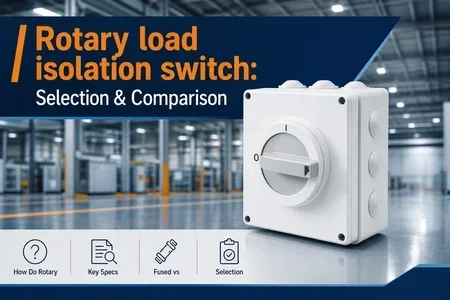
Panel-Mount Rotary Isolator: Installed inside a control panel or distribution box. Offers flexibility in layout but requires additional enclosure for environmental protection. Suitable for clean indoor environments. Buyer note: Total cost includes separate enclosure and wiring.
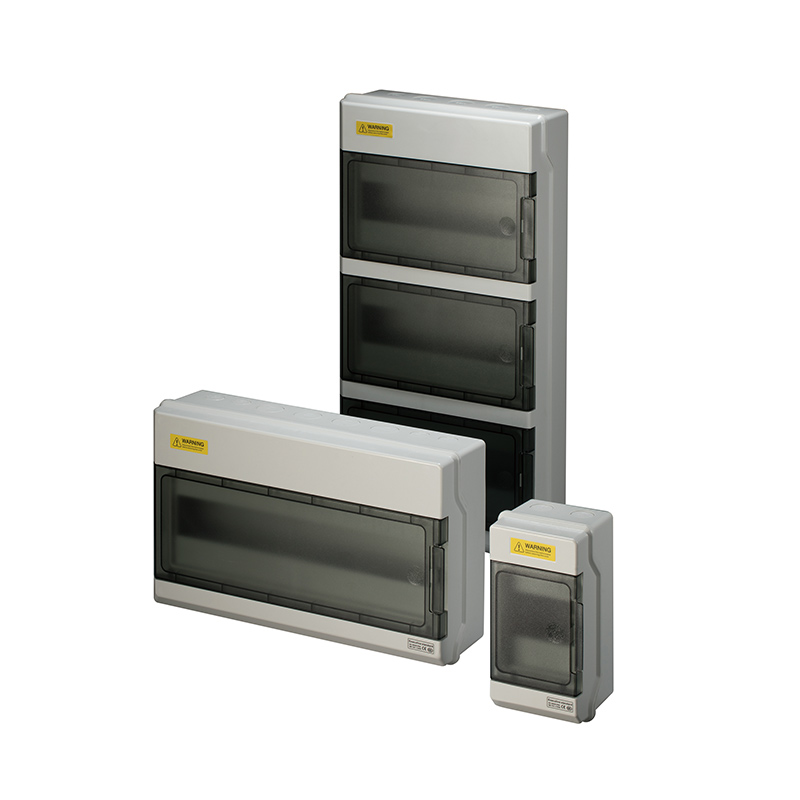
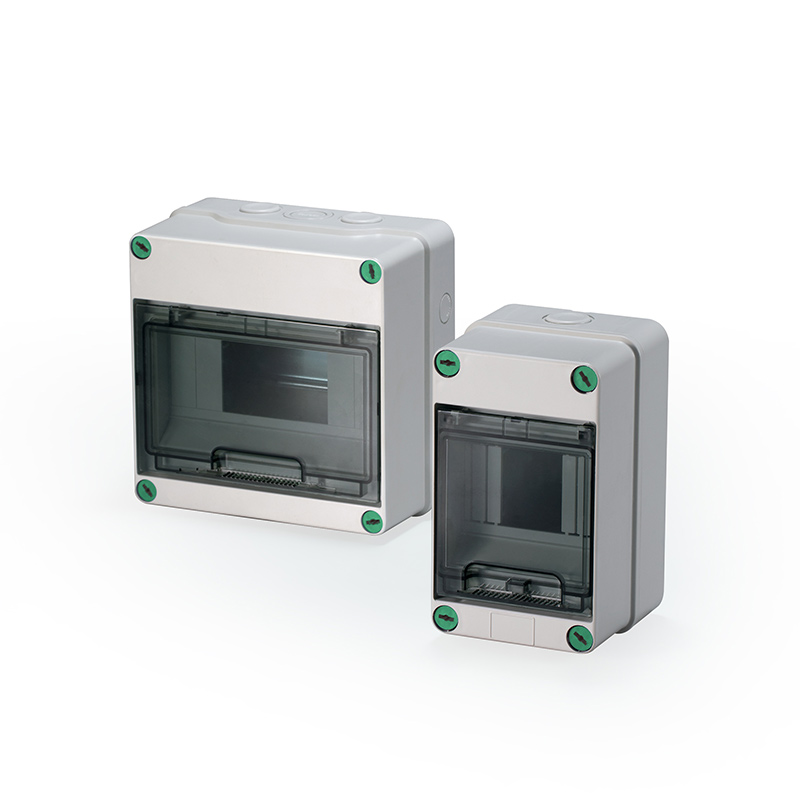
Enclosed Rotary Isolator: Comes in a self-contained IP65 or IP66 rated enclosure. Ready to install near machinery. Typically more expensive upfront but reduces installation labor. Ideal for outdoor or washdown areas. Buyer note: Verify the enclosure material (e.g., polycarbonate, stainless steel) matches chemical exposure.
The choice depends on the environment and installation practice. For a comprehensive selection, review the available load isolation switch and rotary isolator switch options for your specific scenario.
Selection Checklist for Rotary Load Isolation Switches
- Determine required rated operational current (Ie) and voltage (Ue).
- Select number of poles (3 or 4) based on system earthing.
- Choose utilization category (e.g., AC-23A for motors, AC-22A for resistive).
- Verify short-circuit withstand (Icw) and conditional rating (Icc).
- Decide fused vs non-fused based on protection scheme.
- Select mounting style: panel-mount or enclosed (with IP rating).
- Confirm handle type meets lockout/tagout requirements.
- Check operational cycles (mechanical endurance ≥ 10,000 is typical for industrial).
- Review terminal type (cable, busbar) for easy wiring.
Using this checklist will help you narrow down suitable Rotary load isolation switch models and avoid common pitfalls.
Frequently Asked Questions about Rotary Load Isolation Switch Selection
What should buyers understand first about a Rotary load isolation switch?
Start with the required breaking capacity and the type of load (motor, resistive). The Rotary load isolation switch must be rated for switching the specific load, not just isolation. Also verify the switch’s lockout capability to ensure safety compliance.
How can teams reduce selection risk when comparing Load Isolation Switch options?
Use a structured comparison process: document your system parameters (voltage, current, fault level), then request datasheets from at least two suppliers. Compare the key specifications listed in the table above and run a selective coordination study if using fused switches. Involve an electrical engineer in the final review.
Are Rotary Isolator Switch and load break switch the same?
Not exactly. A rotary load isolation switch is a type of load break switch designed for isolation, but some load break switches may not provide a visible air gap. Ensure your chosen product explicitly states “isolation” compliance to IEC 60947-3.
What environmental ratings should I look for in an enclosed rotary isolator?
For outdoor or wet environments, select an enclosed unit with an IP rating of at least IP65. In corrosive or hazardous locations, consider stainless steel enclosures with IP66 or higher. Always match the rating to the specific conditions of the installation site.
Can a panel-mount rotary isolator be used in a damp location?
Only if the panel itself provides sufficient ingress protection. If the panel is rated IP54 or higher and seals are properly maintained, it can be acceptable. Otherwise, an enclosed isolator with a built-in gasket is safer and simpler.
Conclusion
Selecting the right Rotary load isolation switch demands careful evaluation of specifications, tradeoffs between features (fused vs non-fused, panel-mount vs enclosed), and alignment with your application environment. By following the comparison criteria and checklist provided in this guide, you can make an informed, objective decision. Always prioritize safety, maintenance convenience, and compliance with relevant standards. Refer to the Load Isolation Switch, Rotary Isolator Switch product range as a reference point when comparing market options.