English
 中文
中文 Русский
Article Overview: This article helps engineering and procurement teams specify a waterproof junction box for EV charging stations. It answers four practical questions: required IP rating, low-voltage control wiring protection, material selection, and cable entry choices, based on Selhot's published IP66 guidance and without covering charging power levels or high-voltage cable selection.
What Waterproof Rating Should an EV Charger Junction Box Have?
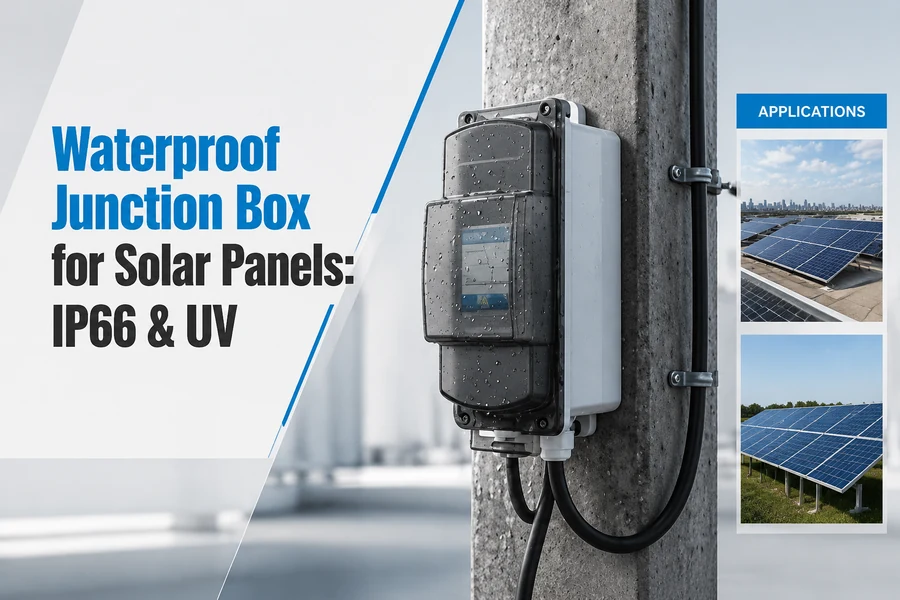
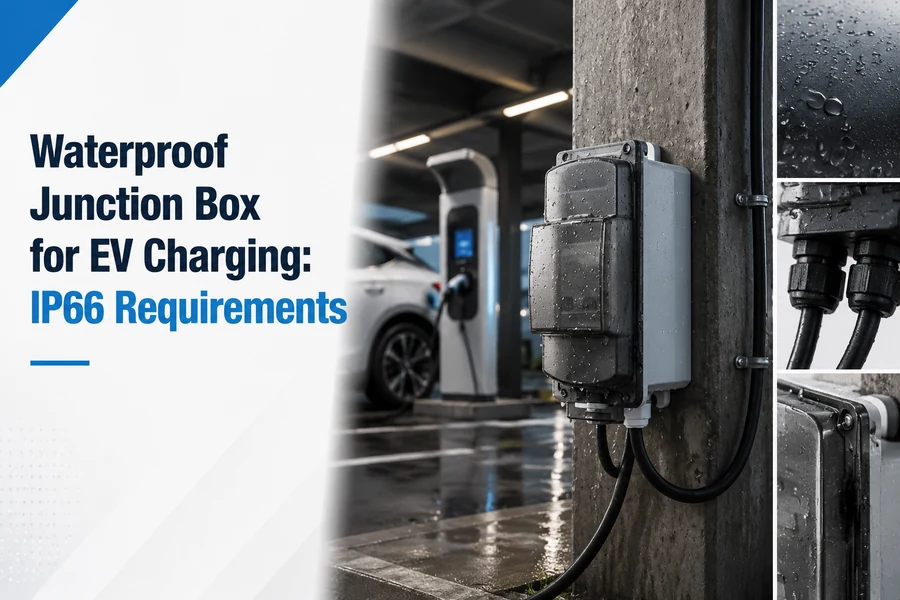
For outdoor EV charging control circuits, an IP66-rated waterproof junction box is the benchmark: dust-tight and protected against powerful water jets. The rating is a system property, not a single gasket, and depends on enclosure, lid, and cable glands.
In the Ingress Protection system, "waterproof" is never absolute. IP66 means the enclosure resists powerful water jets and is fully dust-tight, making it suitable for exposed locations where rain, hose-down cleaning, or wind-driven moisture are routine. The protection does not come from one gasket alone. The body and lid must form a compression seal, often using a continuous polyurethane or silicone gasket. Cable entry points require compatible waterproof cable glands that maintain the enclosure's overall IP integrity.
This requirement applies to the low-voltage control and communication circuits inside a charging pile, not to the high-power charging circuit. Power-level engineering is a separate design discipline and outside the scope of this article.
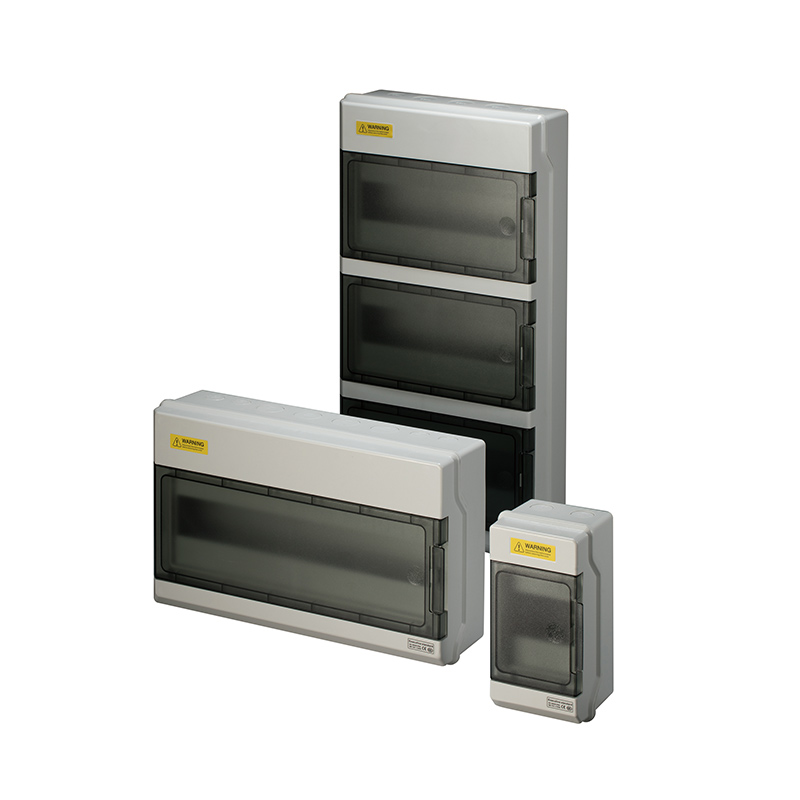
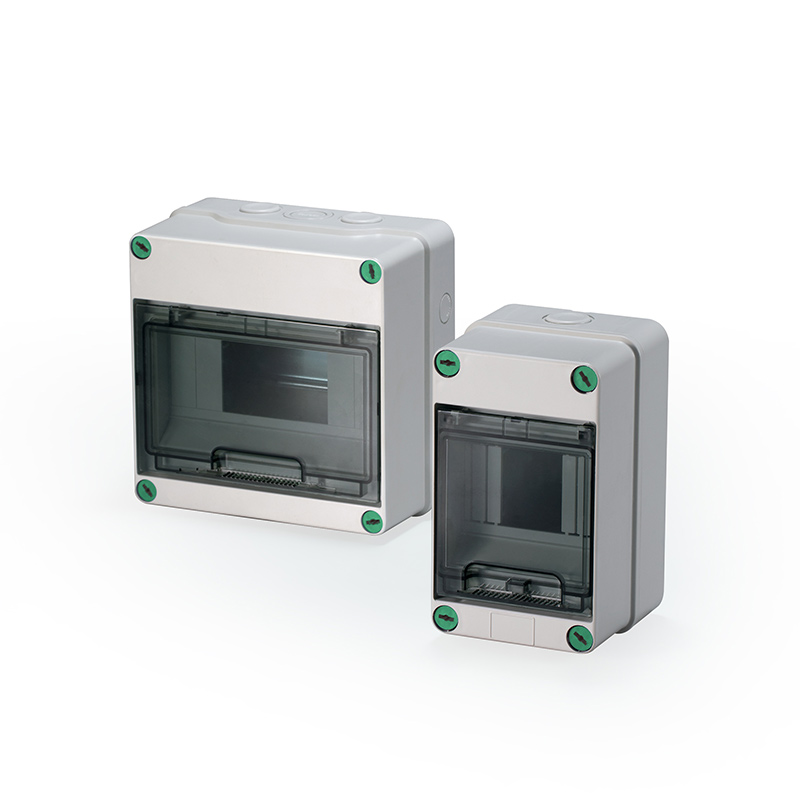
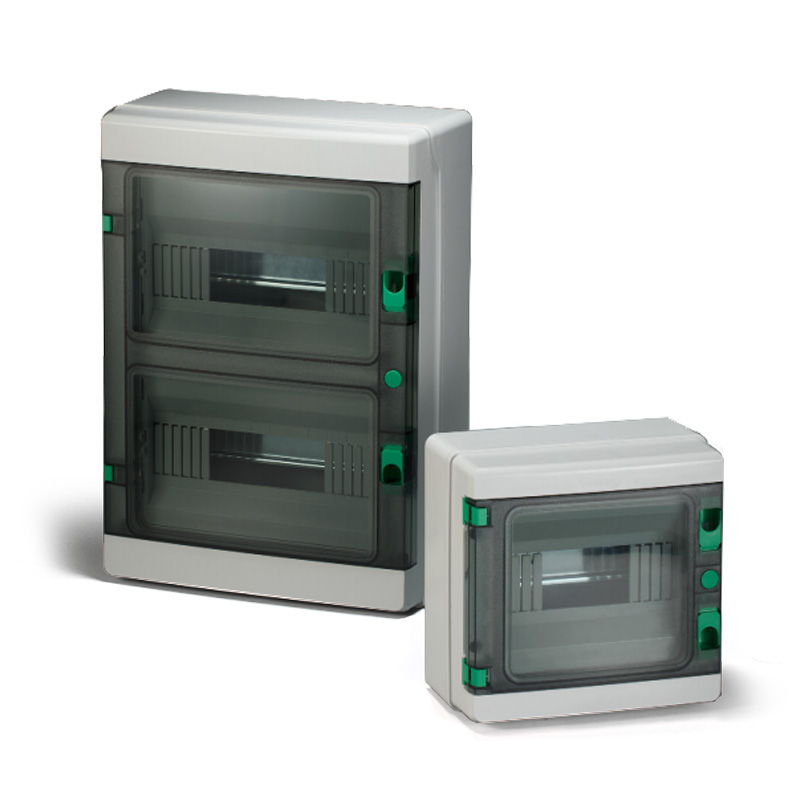
Because one incorrectly sized gland can break the whole system, procurement teams should evaluate the complete assembly—box, lid, hinges, and gland plates—as a single protective system rather than isolated components. For a broader explanation of how outdoor enclosures achieve IP66, the Waterproof outdoor electrical junction box guide covers the same sealing principles in more detail.
How Does a Junction Box Protect Low-Voltage Control Wiring in Charging Piles?
A junction box protects low-voltage control wiring by keeping water and dust away from terminations. Protection comes from a compression-sealed body and lid, compatible cable glands, and an enclosure material that holds the seal over time, preserving signal integrity.
Low-voltage circuits in a charging pile carry control signals, sensor inputs, and communication links. When moisture reaches these terminations, it can cause corrosion, high-resistance connections, and intermittent faults that are difficult to trace in the field. The junction box acts as the boundary that keeps the interior dry.
The two structural elements that make this possible are:
- Compression seal
- A continuous polyurethane or silicone gasket compressed between the enclosure body and lid. It blocks water and dust from entering through the joint while allowing the lid to be reopened for maintenance.
- Cable gland
- A fitting that seals around the cable at its entry point. It must match the cable's outer diameter and be tightened to the manufacturer's specification to preserve the enclosure's rating.
In a charging pile, the box is typically positioned where the low-voltage harness transitions from the pile body to the controller or communication module. The enclosure's job is not to carry mechanical load or manage power; it is to maintain a stable, dry environment for terminations.
Which Enclosure Material Withstands Weather and Vandalism in Public Charging Points?
Polycarbonate thermoplastics are a common choice for outdoor IP66 junction boxes because they resist corrosion and weathering. Metal enclosures can also work, but their vandalism and weather performance depends on coating, gasketing, and impact resistance, so verify per application.
The Selhot guide highlights thermoplastics like polycarbonate as a material class for outdoor waterproof enclosures. Polycarbonate does not corrode, which removes a common failure mechanism for enclosures mounted in rain-exposed locations. For public charging points, impact resistance is a separate consideration from ingress protection; the IP66 rating says nothing about how hard the enclosure is to crack or deform.
Polycarbonate thermoplastics
Corrosion-resistant and widely used for IP66 outdoor junction boxes. The available guidance does not publish specific impact or UV data, so request the manufacturer's material test results for the site's climate and expected abuse.
Metal enclosures
Offer higher mechanical strength but depend on corrosion protection and gasket compatibility to hold the IP66 rating. The reviewed guide does not compare metal vandalism performance, so request test data when specifying public charging infrastructure.
Material choice directly influences long-term waterproof performance, as noted in the guide, but weather resistance alone should not be confused with vandalism resistance. For exposed public chargers, review both the enclosure material and the physical security of the mounting location. The IP66 waterproof outdoor junction box documentation lists polycarbonate as a representative thermoplastic for these applications.
What Cable Entry Options Work for EV Charging Enclosures?
Waterproof cable glands are the primary cable entry option for EV charging enclosures. Each gland must be matched to the cable outer diameter and torqued correctly, because a single undersized or omitted gland breaks the enclosure's IP66 seal.
A cable gland performs two functions at once: it holds the cable mechanically and compresses a seal around the cable jacket. When the gland is correctly sized, the seal blocks water and dust from traveling along the cable into the enclosure. When it is wrong size or missing, the enclosure's rating fails at that point even if the box itself is intact.
The selection workflow is simple but strict:
Step 1: Map the cable entries
List every low-voltage cable that enters the control enclosure and record the outer diameter of each cable jacket.
Step 2: Select matching glands
Choose waterproof cable glands whose sealing range covers each cable diameter. Check that the gland body and seal material are rated to the same ingress class as the enclosure.
Step 3: Preserve the seal during installation
Install each gland according to the manufacturer's torque instructions. Re-check unused openings and close them with rated blanking elements so no entry point is left open.
Gland plates and pre-cut knockouts make field wiring easier, but they only help if the final assembly is complete and sealed. The manufacturer's IP66-rated waterproof outdoor junction box specifications are the reference point for which glands and entry configurations are compatible with a given box.
How Should Procurement Teams Specify an EV Charging Junction Box?
Specify the complete system: the enclosure, its gasket, the cable glands, and the material. Require the supplier to state the IP66 rating for the assembled configuration, and document the cable entry plan before ordering.
A practical specification should separate the functional requirement from the component details. The functional requirement is that the assembled enclosure must maintain IP66 protection throughout its service life in the intended outdoor location. The component details—gasket material, gland sizes, and mounting hardware—are the means to that requirement.
Start with the environmental conditions at the installation site. Rain, high humidity, salt air, and washdown routines all change the stress on the seal system. Polycarbonate enclosures address corrosion concerns, but the exact gasket material should be selected for temperature range and chemical exposure. Ask the supplier which seal compounds are compatible with the enclosure and the site environment.
Next, review the cable entry plan against the circuit diagram. Every cable needs a gland, and every unused opening needs a rated blank. When the design changes after the initial order, update the entry plan before approving the final assembly.
Finally, request the IP66 test report for the configured unit, not just the empty box. The report should show that the enclosure, with its specified gasket and glands, passed the dust and jet water tests. If a supplier can only provide a rating for the empty enclosure, treat the assembled rating as unverified.
FAQ
Can an IP66 junction box be mounted directly on a charging pile?
Mounting depends on the enclosure's mechanical design and the charging pile's structure. An IP66 rating covers protection against dust and water jets, not mechanical loads or vibration. Confirm the enclosure's mounting points, weight, and vibration environment with the manufacturer before installation.
Does an IP66 rating protect against vandalism?
No. IP66 addresses ingress of dust and water, not impact, cutting, or forced entry. For public charging points, evaluate material impact resistance and physical security separately from the ingress rating. The guide's scope is waterproofing, not security hardware.
How often should outdoor EV charging junction boxes be inspected?
Inspection intervals are a site-maintenance decision. Check gasket compression, gland tightness, and any signs of water staining after heavy rain or washdown events. The reviewed guide does not specify a maintenance schedule, so use operator policy and environmental exposure as the baseline.
Conclusion: Specify the Complete IP66 System, Not Just the Box
For EV charging station control wiring, an IP66-rated waterproof junction box is the expected baseline for outdoor installations. The rating only holds when the lid seal, cable glands, and enclosure material work together. Polycarbonate thermoplastics are a practical choice for weather resistance, while metal enclosures require site-specific verification. Procurement and engineering teams should evaluate the full assembly—box, gasket, glands, and mounting—and ask suppliers for test data on the complete system rather than assuming the box alone is sufficient.