English
 中文
中文 Русский
Article Overview: This guide helps procurement managers, sourcing teams, and project engineers evaluate Waterproof Junction Boxes Electrical with a checklist mindset. It focuses on supplier fit, material validation, RFQ readiness, and risk reduction. You will find decision criteria for PC Plastic Waterproof Electronic Junction Box solutions, application-specific checks, and answers to common buyer questions—all designed to support a confident purchase decision.
Why Material Choice Dictates the Life of Waterproof Junction Boxes Electrical
When you specify Waterproof Junction Boxes Electrical, the enclosure material is not a secondary detail—it is the primary defence against field failure. Procurement teams often focus on price per unit, but a material mismatch can lead to premature cracking, water ingress, or fire risk, wiping out any upfront savings. The two most common thermoplastics you will encounter in this category are ABS and polycarbonate (PC). Understanding the trade-offs between them is essential before you issue an RFQ.
Plastic junction boxes are widely used in low-voltage electrical installations because they offer fire resistance, electrical insulation, and resistance to corrosion, acids, and alkalis. However, not all plastics perform equally under thermal load, UV exposure, or mechanical impact. A PC Plastic Waterproof Electronic Junction Box typically delivers higher impact strength and better UV stability than an ABS equivalent, making it the preferred choice for outdoor or high-traffic industrial environments. ABS, while cost-effective and easy to mould, may become brittle after prolonged sun exposure unless specifically UV-stabilised.
For procurement decision-makers, the key question is: where will the enclosure be installed, and what environmental stresses will it face? If your project involves direct sunlight, frequent temperature swings, or risk of physical impact, a PC Plastic Waterproof Electronic Junction Box solution is likely the safer long-term investment. For indoor, climate-controlled applications with budget pressure, an ABS-based Waterproof Junction Boxes Electrical may meet the specification at a lower unit cost. Always ask suppliers to provide material datasheets that document UV resistance (e.g., UL 746C f1 rating for outdoor suitability) and flammability class (e.g., UL 94 V-0 or V-2) before you shortlist.
ABS vs. PC: Quick Procurement Comparison
Option A – ABS Enclosure: Lower raw material cost; good impact resistance at room temperature; adequate for indoor electrical connections. Risk: can degrade under UV and may have lower continuous-use temperature limits (typically 60–80°C) unless modified. Check for UV-stabilised grades if outdoor use is specified.
Option B – PC Enclosure: Higher impact strength, excellent transparency option, superior UV and weather resistance, wider operating temperature range (often -40°C to 120°C). Typically carries a price premium. Shells crafted from new environmentally friendly PC material also support sustainability goals. Ideal for outdoor IP66-rated Waterproof Junction Boxes Electrical.
Buyer note: Request the exact material grade (e.g., PC/ABS blend, virgin PC, halogen-free PC) in the supplier’s technical proposal. Compare not just the material name but the datasheet values for impact strength (Izod, kJ/m²), heat deflection temperature (HDT), and UL flame class.
How Should You Validate IP Ratings Before Ordering Waterproof Junction Boxes Electrical?
An IP66 or IP65 rating printed on a datasheet is only as reliable as the testing and quality control behind it. For Waterproof Junction Boxes Electrical, the ingress protection (IP) rating defines whether the enclosure can keep out dust, water jets, or temporary submersion. Procurement professionals should treat the IP rating as a claim that must be substantiated, not a guarantee.
Start by confirming which international standard the supplier uses for testing—IEC 60529 is the most widely recognised. Ask whether the rating applies to the complete assembly (enclosure plus cable glands, gaskets, and lid) or only to the empty box. A common failure point is the gasket material: EPDM, silicone, or polyurethane each behave differently under temperature cycling and chemical exposure. For outdoor IP66 weatherproof applications, silicone gaskets often retain elasticity better over time, but they come at a higher cost. Validate that the supplier’s gasket specification matches your operational temperature range.
Second, request batch-level test reports or a quality-control sampling plan. A reputable manufacturer will be able to show in-house IP test records or third-party certification for the specific model you are buying. If you are sourcing a PC Plastic Waterproof Electronic Junction Box for a marine, wastewater, or food-processing environment, ask about additional corrosion-resistance tests such as salt-spray (ISO 9227). Without this evidence, a low-price enclosure that fails after six months of exposure can create warranty claims, site rework, and reputational damage that far exceed the initial saving.
Step 1: Define the Real Environmental Load
List all environmental factors the enclosure will face: rain, hose-down cleaning, dust, UV, chemical splash, vibration, and temperature extremes. Map each factor to a specific IP digit requirement (e.g., IP66 for powerful water jets, IP67 if temporary immersion is possible). Share this list with suppliers as part of the RFQ package so they can propose the correct gasket, material, and design.
Step 2: Audit the Supplier’s Test Evidence
Request the test standard (IEC 60529), the test report date, and whether testing was performed on a production sample or a prototype. For high-volume orders, ask about ongoing conformance testing—does the supplier re-test periodically, and what is the sampling frequency? A supplier that cannot produce a recent test report for the exact model you are evaluating introduces unnecessary sourcing risk.
What Should Your RFQ Cover for a PC Plastic Waterproof Electronic Junction Box?
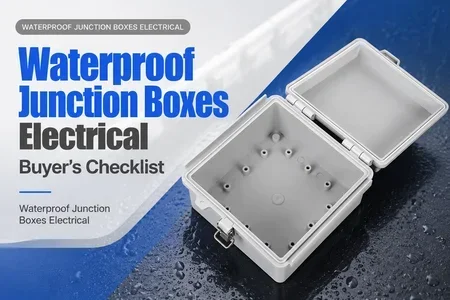
An RFQ for Waterproof Junction Boxes Electrical that only specifies dimensions and quantity invites ambiguity. To get comparable quotes and reduce post-order surprises, your request for quotation must address mechanical, electrical, and compliance requirements in detail. This is especially true when you are evaluating a PC Plastic Waterproof Electronic Junction Box, where material grade and mould quality directly affect long-term reliability.
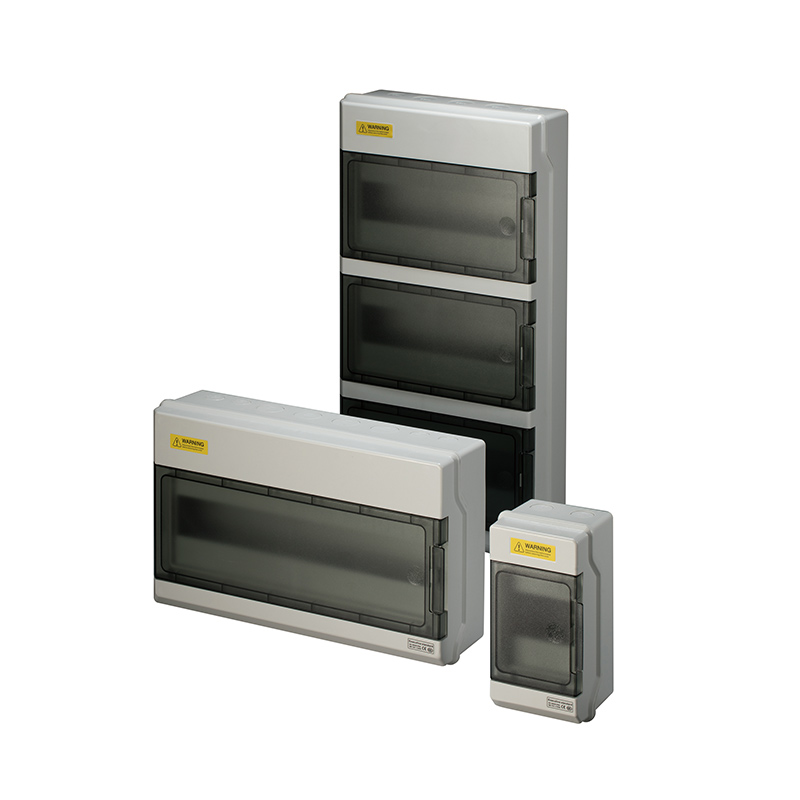
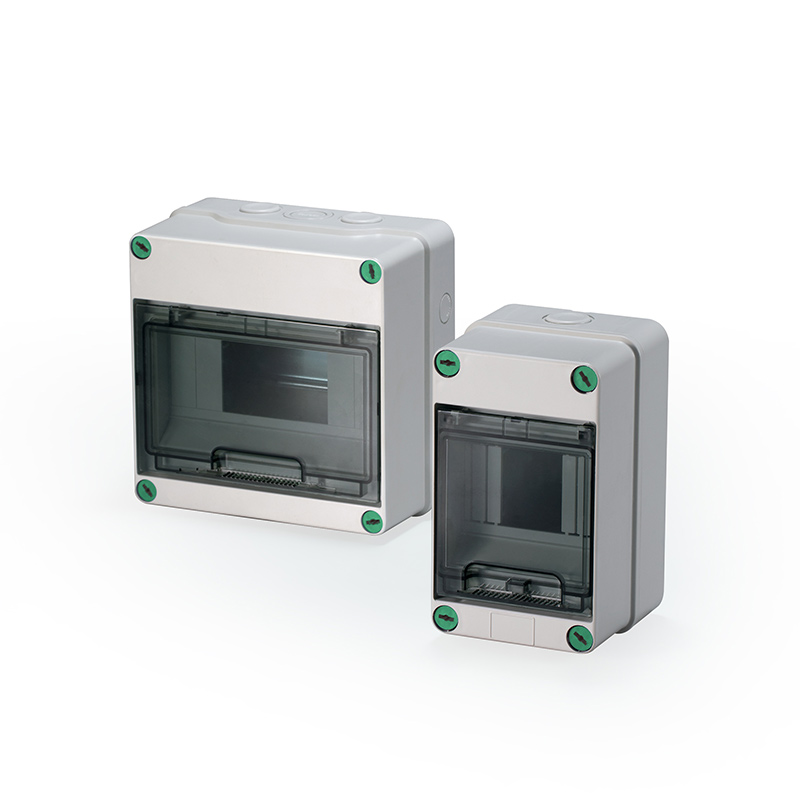
Begin with the enclosure geometry: external dimensions, wall thickness, number of cable entries, and whether entries are pre-moulded knockouts or require field machining. Specify the lid type—screw-fixed, hinged with stainless steel pins, or snap-fit—and whether you need a transparent or opaque cover. For example, a transparent PC lid allows visual inspection of internal terminals and wiring without opening the enclosure, which can be a maintenance advantage in industrial control panels. Next, define the terminal and mounting requirements: DIN rail, backplate, or custom brackets, plus the maximum terminal current and voltage rating.
Compliance documentation is a non-negotiable section of a professional RFQ. Ask for the UL flame class, glow-wire test results (IEC 60695-2-11) if applicable, RoHS and REACH declarations, and any regional certifications such as CE, UKCA, or UL listing. For buyers integrating these enclosures into a larger assembly that will itself be certified, having the sub-component compliance file ready accelerates your own approval process. Finally, include commercial terms: MOQ, lead time, packaging (bulk or individual box), and whether the supplier offers custom colour, printing, or laser marking.
Below is a checklist of RFQ line items that procurement teams often overlook:
- Material grade and manufacturer (e.g., Sabic Lexan PC, Chi Mei ABS) with datasheet.
- Gasket material, hardness (Shore A), and compression set value.
- Operating temperature range, with separate values for continuous and peak exposure.
- UV resistance rating and test method (UL 746C or equivalent).
- Ingress protection test report for the complete assembly, including cable glands.
- Flammability rating and glow-wire test temperature.
- Third-party certification marks (CE, UKCA, UL, etc.) and certificate validity.
- Customisation lead time and one-time tooling or setup charges.
Supplier Evaluation Criteria That Reduce Long-Term Sourcing Risk
Price comparison alone is a weak proxy for total cost of ownership. When you source Waterproof Junction Boxes Electrical, the supplier’s manufacturing capability, quality management system, and after-sales support have a direct impact on your project timeline and field failure rate. Procurement teams should build a weighted supplier scorecard that balances commercial and technical factors.
Visit the supplier’s factory or request a virtual tour that shows the injection moulding floor, material handling, and testing laboratory. Look for evidence of systematic quality control: incoming resin inspection, in-process dimensional checks, and finished-product testing. A supplier that operates a Manufacturing Execution System (MES) is more likely to deliver batch traceability, which is critical if a defect is discovered later. Ask whether the supplier uses recycled or regrind material in the enclosure walls; while some regrind is acceptable in non-critical areas, excessive use can compromise impact strength and UV resistance. For a PC Plastic Waterproof Electronic Junction Box solution, insist on virgin or certified post-industrial PC unless your application specifically allows regrind.
After-sales capability matters as much as the initial order. Clarify the warranty period, the process for raising a quality claim, and whether the supplier provides failure analysis reports. If you are buying for a multi-year project, ask about version control: will the supplier notify you before changing the material grade, gasket supplier, or mould tool? Uncontrolled changes are a common source of field compatibility problems. Finally, evaluate logistics: where are the supplier’s distribution warehouses, what are the standard Incoterms, and can they support consignment stock or just-in-time delivery if your production schedule requires it?
- Verify the supplier’s injection moulding capacity and tool maintenance schedule.
- Review the quality management system certification (ISO 9001 minimum; IATF 16949 is a plus for automotive-related applications).
- Request a material traceability sample report showing batch number, resin supplier, and processing date.
- Confirm the warranty terms and the average turnaround time for defect resolution.
- Check references from buyers with a similar application environment and volume.
How Do Installation Practices Affect the Performance of Waterproof Junction Boxes Electrical?
Even the best-engineered PC Plastic Waterproof Electronic Junction Box can fail if installed without attention to cable entry sealing and internal condensation management. Procurement professionals who also influence on-site specifications can reduce callbacks by including installation guidelines in the supply contract or by selecting enclosures with design features that make correct installation easier.
Cable glands are the most common water ingress point. The gland thread type (PG, metric, or NPT) must match the enclosure entry, and the gland’s IP rating must equal or exceed the enclosure rating. When multiple cables enter a single box, ensure there is enough internal volume to maintain the minimum bending radius specified by the cable manufacturer. Overcrowding not only strains the cables but can also distort the enclosure gasket, breaking the seal. Some Waterproof Junction Boxes Electrical include a clamshell or hinged lid with a stainless steel hinge pin, which allows maintenance access without removing the entire cover and re-seating the gasket each time—a small design detail that reduces long-term maintenance risk.
Condensation is another hidden threat. In outdoor installations subject to temperature cycling, moist air trapped inside a sealed enclosure can condense and pool, eventually causing terminal corrosion or electrical tracking. If your application cannot tolerate any internal moisture, specify an enclosure with a ventilation drain or a breathable membrane vent that equalises pressure while blocking liquid water. Alternatively, include a desiccant pack or anti-condensation heater in the bill of materials. Discuss these ancillary components with your enclosure supplier early: a manufacturer that offers a complete PC Plastic Waterproof Electronic Junction Box system—including compatible glands, vents, and mounting plates—simplifies your supply chain and ensures component compatibility.
FAQ
What is the difference between IP65 and IP66 for Waterproof Junction Boxes Electrical?
IP65 protects against low-pressure water jets from any direction; IP66 protects against powerful water jets. For areas exposed to heavy rain, wash-down cleaning, or sea spray, IP66 is the safer specification. Always confirm that the test report covers the enclosure with all cable entries sealed as they would be in the final installation.
Can a PC Plastic Waterproof Electronic Junction Box be used in direct sunlight?
Yes, provided the polycarbonate is UV-stabilised. Virgin PC with appropriate UV additives resists yellowing and embrittlement far better than standard ABS. Ask the supplier for accelerated weathering test data (e.g., Xenon arc per ISO 4892) to confirm long-term outdoor performance.
How do I know if I need a transparent or opaque cover?
Choose a transparent PC cover when visual inspection of internal terminals, fuses, or indicator LEDs is required without opening the enclosure. Opaque covers are typically sufficient for buried or concealed installations where inspection access is planned during scheduled maintenance shutdowns.
What certifications should I look for when importing Waterproof Junction Boxes Electrical?
At minimum, look for CE marking for the European market, UKCA for Great Britain, and UL listing or recognition for North America. Depending on the end-use industry, you may also need IECEx or ATEX for explosive atmospheres, or marine type-approval certificates. Always verify certification validity and scope with the issuing body’s online database.
Is it safe to mount a junction box outdoors without additional protection?
An IP66-rated PC Plastic Waterproof Electronic Junction Box is designed for outdoor exposure, but mounting location still matters. Avoid positioning the box where it will sit in standing water or be subjected to direct, high-pressure steam cleaning unless the IP rating and material datasheet explicitly permit it. Use stainless steel mounting brackets and fasteners to prevent galvanic corrosion at the attachment points.
Conclusion: Making a Confident Purchase Decision
Procuring Waterproof Junction Boxes Electrical is a multi-factor decision that goes well beyond comparing unit prices. The right choice integrates material science, ingress protection validation, supplier quality systems, and installation foresight. By anchoring your RFQ around a clear environmental specification, demanding verifiable test evidence, and evaluating suppliers on total cost of ownership rather than ex-works price alone, you reduce the risk of field failures and unplanned maintenance costs. Whether you ultimately select an ABS enclosure for a cost-sensitive indoor project or a PC Plastic Waterproof Electronic Junction Box for a demanding outdoor installation, the checklist mindset explored in this guide will help you build a defensible, repeatable sourcing process. For further technical details and product-specific datasheets, explore the Product range or contact a specialist to discuss your application requirements.