English
 中文
中文 Русский
Article Overview: This educational guide explains the engineering fundamentals behind an Outdoor IP66 Weatherproof Plastic Junction Box. From ingress protection ratings and polymer selection to gasket technology and rigorous Quality Control solutions, readers will gain a clear, early-stage understanding of what makes these enclosures reliable in harsh environments. Designed for technical buyers, engineering managers, and project leads, the article provides unbiased, information-rich content to help evaluate enclosure performance before engaging suppliers.
What Does IP66 Mean for an Outdoor IP66 Weatherproof Plastic Junction Box?
An IP (Ingress Protection) rating, defined by the IEC 60529 standard, classifies how well an enclosure blocks foreign bodies and moisture. For an Outdoor IP66 Weatherproof Plastic Junction Box, the first digit “6” signals complete protection against dust—a dust-tight design that prevents any particle intrusion. The second digit “6” indicates the enclosure can withstand powerful water jets from any direction. During the official test, a 12.5 mm nozzle projects 100 liters of water per minute at the unit from 2.5–3 meters away for a minimum of three minutes. To pass, the interior must show zero water ingress.
This level of protection makes the Outdoor IP66 Weatherproof Plastic Junction Box ideal for installations such as solar farms, wastewater treatment facilities, outdoor telecom cabinets, and transportation infrastructure. The enclosure resists heavy rain, hose-directed washdowns, and even temporary flooding of spray, though it is not designed for continuous submersion. If an application calls for burial or prolonged underwater exposure, a higher rating like IP67 or IP68 is required. Similarly, industrial settings that use high-temperature, high-pressure washers demand an IP69K enclosure, which adds protection against steam and close-range jets.
Step 1: Interpreting the IP Code for Your Application
When specifying an Outdoor IP66 Weatherproof Plastic Junction Box, map the real-world exposure to the IP rating. Consider the worst-case scenario—not average conditions. If on-site cleaning involves pressure washers, look beyond IP66. For outdoor locations with seasonal flooding, confirm the enclosure is mounted above expected water levels rather than relying on a higher IP rating. This early clarification prevents costly field failures.
Why Material Selection Matters for an Outdoor IP66 Weatherproof Plastic Junction Box
The polymer housing of an Outdoor IP66 Weatherproof Plastic Junction Box is its main defense against UV radiation, temperature swings, impact, and chemical attack. Engineers typically choose from three families of thermoplastics: ABS (acrylonitrile butadiene styrene), polycarbonate (PC), and PC/ABS blends. Each brings distinct trade-offs in cost, durability, and processing behavior.
ABS is economical and resists reasonable impacts. However, unmodified ABS degrades rapidly under ultraviolet light, leading to chalking and cracking within a few years outdoors. To combat this, manufacturers incorporate UV stabilizers—chemical additives that absorb or reflect UV radiation—which can extend outdoor service life significantly. Even so, UV-stabilized ABS performs best in partially shaded or moderate climates. Polycarbonate, by contrast, offers inherent UV stability, outstanding impact strength (over 200 times that of glass), and a broad operating temperature range from -40 °C to +120 °C. This makes it the preferred choice for critical outdoor infrastructure where longevity and safety are paramount.
Halogen-free PC/ABS blends are gaining traction in transportation and public building projects. They burn with low smoke density and without emitting corrosive gases, meeting stringent fire-safety codes. When evaluating any polymer for an Outdoor IP66 Weatherproof Plastic Junction Box, look for UL 94 flammability ratings (V-0, V-1, or HB) and, when applicable, glow wire test results (IEC 60695-2-11). Wall thickness uniformity, reinforced ribs, and stress-relieved corners also matter: uneven thickness can cause warping during thermal cycling, which gradually compromises the IP66 seal.
- ABS: Moderate cost, temperature range roughly -20 °C to +70 °C. Requires UV stabilization for outdoor use. Best for cost-sensitive, non-safety-critical applications.
- Polycarbonate: High impact and UV resistance, -40 °C to +120 °C range. Ideal for long-life, safety-critical outdoor infrastructure.
- Halogen-free PC/ABS blends: Combines toughness with fire safety, meeting low-smoke zero-halogen (LSZH) requirements for tunnels, stations, and public venues.
- Glass-fiber reinforced grades: Increase stiffness and heat deflection temperature but may introduce brittleness; suitable for mechanically loaded enclosures when specified carefully.
How Is an Outdoor IP66 Weatherproof Plastic Junction Box Manufactured?
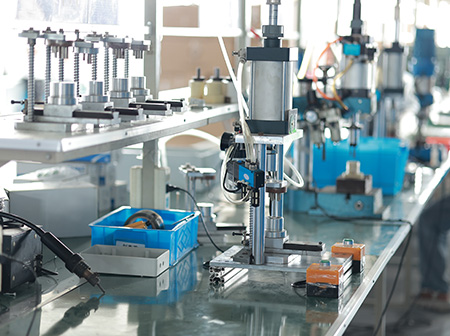
Injection molding is the dominant production method. Molten polymer is injected under high pressure into a precision-machined steel mold. The quality of the finished enclosure depends on dozens of variables: melt temperature, injection speed, holding pressure, cooling time, and mold temperature. Slight deviations can create internal stresses that later manifest as micro-cracks around knockouts, hinge points, or mounting lugs. For an Outdoor IP66 Weatherproof Plastic Junction Box, such flaws risk water ingress over time.
Leading manufacturers employ mold flow simulation software during tool design to predict how the polymer will fill the cavity, identifying potential weld lines, air traps, and warpage before cutting steel. In production, closed-loop control systems continuously adjust parameters using feedback from sensors embedded in the mold and barrel. This ensures shot-to-shot consistency, which is critical for maintaining the flatness of sealing surfaces. A hinged lid, for example, demands that both the box and lid flanges remain perfectly parallel so the gasket compresses uniformly. Any deviation can open a leakage path.
Step 2: Connecting Production Data to Traceability
When a manufacturing execution system (MES) is integrated, each production lot ties back to raw material batches, machine settings, cavity number, and quality checks. This digital thread enables rapid root-cause analysis: a field failure can be tracked to a specific shift or resin lot within hours. For procurement teams, MES-driven traceability signals a mature, accountable process—a key differentiator among suppliers of Outdoor IP66 Weatherproof Plastic Junction Box products.
What Role Do Sealing and Gasket Technologies Play in an IP66 Junction Box?
Achieving IP66 protection is not solely about the enclosure shell; the gasket or seal is equally critical. Outdoor IP66 Weatherproof Plastic Junction Box designs typically use a pre-formed gasket seated in a groove, compressed between the lid and the base. Common materials include EPDM (ethylene propylene diene monomer), neoprene, and silicone. Each has distinct temperature ranges, compression set resistance, and chemical resistance.
EPDM rubber excels in outdoor environments, resisting ozone, UV, and weathering, with a temperature range of about -40 °C to +120 °C. Neoprene offers good oil and chemical resistance but hardens more in extreme cold. Silicone gaskets retain flexibility down to -60 °C and withstand high temperatures up to 200 °C, making them ideal for arctic or desert installations. The gasket’s cross-section—whether O-ring, D-profile, or custom lip—affects how it deforms under load. A properly designed groove prevents over-compression, which can set the gasket and reduce sealing force over time. Manufacturers often validate gasket performance through accelerated aging tests and compression set measurements, ensuring the Outdoor IP66 Weatherproof Plastic Junction Box maintains its seal after decades of thermal cycling.
Lid closure mechanisms also matter. Hinged lids with captive stainless-steel latches allow quick access without losing hardware, while screw-on lids provide evenly distributed, high clamping force. Both designs can achieve IP66 if the gasket and sealing surface geometry are carefully engineered.
Quality Control Essentials for Outdoor IP66 Weatherproof Plastic Junction Box Manufacturing
Design integrity and material selection mean little without robust process control. A comprehensive Quality Control approach for an Outdoor IP66 Weatherproof Plastic Junction Box spans the entire value chain. Incoming polymer resins are verified for grade, UV stabilizer content, and flame retardancy. During molding, statistical process control (SPC) monitors critical dimensions such as wall thickness, sealing surface flatness, and knockout wall thickness. Coordinate measuring machines (CMM) and laser scanners provide micron-level data, allowing operators to spot tool wear or process drift before defective parts are produced.
Final testing is where the IP66 claim is proven. Many manufacturers follow AQL-based sampling for water jet testing. However, high-reliability suppliers often add a 100% air-leak decay test: each assembled enclosure is pressurized with air, and a pressure drop above a predefined threshold automatically rejects the unit. This non-destructive test catches hairline cracks, pinholes, or poorly seated gaskets that visual inspection would miss. The result is an Outdoor IP66 Weatherproof Plastic Junction Box that genuinely meets specification when it reaches the field.
- Incoming material certification: Validate polymer grade, UV package, and flammability rating per engineering specs.
- First-article inspection: After mold maintenance or material change, conduct a full dimensional report for each cavity.
- In-process SPC: Track sealing-surface flatness and wall thickness at predefined intervals; trigger corrective actions when trends deviate.
- Final functional test: Perform air-leak decay or sample water-jet testing to confirm IP66 integrity on every production lot.
How Do You Evaluate Suppliers of an Outdoor IP66 Weatherproof Plastic Junction Box?
Choosing the right supplier involves more than comparing datasheets. A disciplined evaluation process reduces long-term risk. Start by examining the supplier’s in-house testing capabilities: a well-equipped laboratory with calibrated instruments (ideally over twenty) indicates a commitment to quality. Ask about their MES integration—paper logs suggest an opportunity for human error, while digital traceability supports faster, more accurate root-cause analysis.
When exploring Junction Box options, request evidence of real-world IP66 validation, such as third-party test reports or certifications. Evaluate not just the unit price, but the total cost of ownership. An enclosure that fails prematurely in a remote solar field or a roadside cabinet can incur repair costs far exceeding the purchase price. The decision often boils down to two sourcing strategies: price-driven buys for non-critical indoor settings, versus total-cost-of-ownership partnerships for outdoor, safety-critical installations. In the latter case, an Outdoor IP66 Weatherproof Plastic Junction Box supplier with integrated Quality Control solutions and demonstrable traceability offers significantly lower field-failure risk.
Step 3: Conducting a Structured Factory Audit for IP66 Enclosures
If a site visit or virtual audit is possible, focus on three areas: raw material storage (look for dryers and contamination controls), the molding floor (observe SPC charts and mold maintenance logs), and the testing lab (confirm air-leak test stations and calibration stickers). A supplier that welcomes scrutiny and can walk you through their failure analysis process is likely one that builds an Outdoor IP66 Weatherproof Plastic Junction Box with genuine quality embedded, not merely claimed.
FAQ
Can an Outdoor IP66 Weatherproof Plastic Junction Box be buried underground?
No. IP66 is designed for powerful water jets, not continuous submersion. For direct burial, you need an enclosure rated IP67 or IP68, and you must account for soil pressure and ground movement.
What is the difference between ABS and polycarbonate for outdoor junction boxes?
Polycarbonate offers superior UV resistance, broader temperature range (-40 °C to +120 °C), and higher impact strength. UV-stabilized ABS can be sufficient for sheltered outdoor spots, but for long-term exposure, polycarbonate is the safer, more durable choice.
How often should an Outdoor IP66 Weatherproof Plastic Junction Box be inspected?
In clean, temperate environments, an annual visual check of the lid seal, cable glands, and mounting points is usually enough. In coastal, heavy-industrial, or high-UV areas, six-monthly inspections help catch early signs of gasket hardening or material degradation.
Is a hinged lid better than a screw-on lid for IP66 enclosures?
Both can achieve IP66 when properly engineered. Hinged lids with captive fasteners enable quick, tool-free access. Screw-on lids generally provide more uniform compression and a lower profile, but they take longer to open and close. The choice depends on maintenance access needs.
Do I need a special gasket for an Outdoor IP66 Weatherproof Plastic Junction Box in extreme cold?
Silicone gaskets remain flexible at temperatures as low as -60 °C, outperforming EPDM and neoprene in cold climates. Always confirm the gasket material’s low-temperature rating with the supplier.
Can a plastic junction box achieve IP66 with knockouts or cable entries?
Yes, if the entries are fitted with appropriately rated cable glands or sealing plugs. The gland-body interface and the gland-to-cable seal both contribute to the overall IP rating. Only use components that have been tested together and are certified as a system.
Conclusion: Building Confidence Through Engineering and Quality Control
An Outdoor IP66 Weatherproof Plastic Junction Box may appear to be a simple component, but its performance rests on a multi-layered foundation of material science, precision manufacturing, and rigorous quality assurance. By understanding the IP rating tests, polymer behaviors, gasket dynamics, and supplier evaluation criteria, technical decision-makers can look beyond price sheets and make risk-informed choices. When the selected enclosure is backed by traceable production and uncompromising Quality Control solutions, the result is long-term reliability for every outdoor electrical connection—from solar array combiner boxes to traffic control cabinets.