English
 中文
中文 Русский
Article Overview: This guide provides a neutral, buyer-focused comparison of the Outdoor IP66 Weatherproof Plastic Junction Box against other common ingress protection ratings. It covers evaluation criteria, performance tradeoffs, and decision guidance to help you select the right enclosure for outdoor, dusty, or wet installations. We examine real-world application scenarios and specification differences without favoring any single manufacturer.
What Are the Key Differences Between IP65, IP66, and IP67?
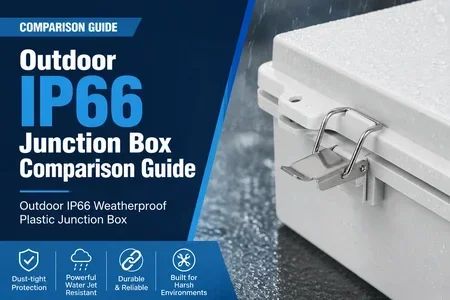
The IP (Ingress Protection) rating system defines the level of sealing effectiveness against solids and liquids. The Outdoor IP66 Weatherproof Plastic Junction Box is designed to be dust-tight and protected against powerful water jets (e.g., from a hose or heavy rain). In contrast, an IP65-rated enclosure is only protected against low-pressure water jets, while IP67 adds temporary submersion (up to 1 meter for 30 minutes). The following table summarizes the critical specification differences:
| Parameter | IP65 | IP66 | IP67 |
|---|---|---|---|
| Dust protection | Dust-tight | Dust-tight | Dust-tight |
| Water protection | Low-pressure jets (6.3 mm nozzle) | Powerful jets (12.5 mm nozzle, 100 l/min) | Immersion up to 1 m depth |
| Typical outdoor use | Light rain, splashes | Heavy rain, hose-down cleaning | Flood-prone areas, temporary submersion |
| Plastic material suitability | Often same as IP66 | Reinforced plastic, UV-stabilized | Same as IP66 with enhanced gasket |
| Cost level | Lowest | Moderate | Higher |
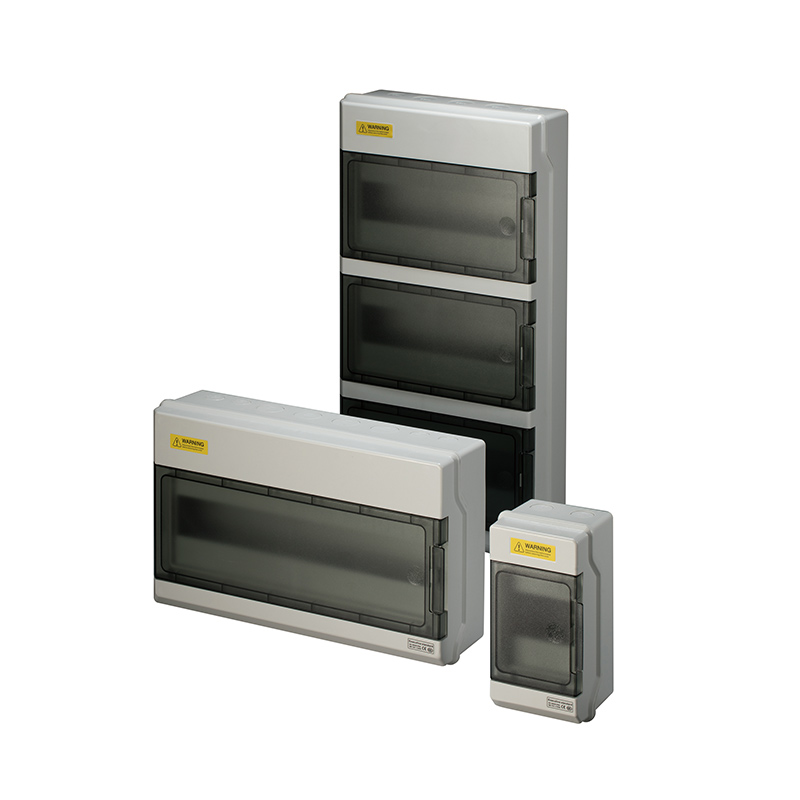
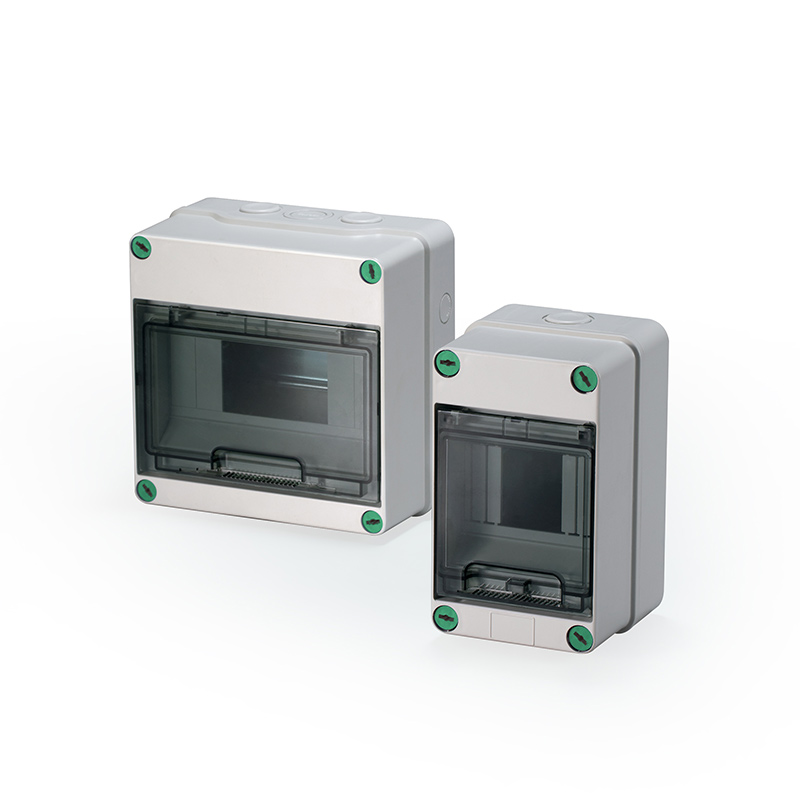
When choosing an Outdoor IP66 Weatherproof Plastic Junction Box, you gain a robust seal against pressurized water without the cost premium of full submersion rating. This makes it ideal for most rooftop, garden, and industrial outdoor applications.
How to Select the Right Junction Box for Your Environment?
Selection should be based on three primary criteria: exposure to water pressure, temperature range, and mechanical impact risk. Below is a structured evaluation process.
Use this flow to match your site conditions to the right rating and material composition.
Performance Tradeoffs in Real-World Applications
Best for: outdoor telecommunications, security camera connections, garden lighting, and industrial sensor enclosures where hose-down cleaning is routine.
Option B: IP67 Plastic Junction Box
Best for: underground cable joints, floodplain installations, and marine docks where submersion is possible.
Buyer Note: Choose IP66 when water exposure is intermittent and pressurized but not prolonged immersion. The cost savings can be 15–25% compared to IP67, and the lighter weight of plastic reduces mounting hardware requirements.
Pros: High impact resistance, UV stable, wide temperature range. Cons: Slightly higher cost than ABS.
Option B: ABS Plastic Outdoor IP66 Box
Pros: Lower cost, good chemical resistance. Cons: Lower UV resistance; may require UV coating for long-term outdoor use.
Buyer Note: For direct sun exposure in hot climates, polycarbonate is the preferred material. In shaded or indoor-outdoor environments, ABS can be a cost-effective alternative.
Installation and Maintenance Considerations
- Gasket Integrity: Ensure the sealing gasket is properly seated and made of closed-cell silicone or neoprene. Replace gaskets if compression is lost.
- Cable Entry Sealing: Use IP66-rated cable glands for all entries. Unused entries must be sealed with blanking plugs.
- Mounting Position: Install with the hinge side upward (if hinged) to prevent water pooling on the lid seam.
- UV Degradation: Even UV-stabilized plastic may become brittle after years of direct sunlight. Periodic inspection is recommended.
Frequently Asked Questions
What should buyers evaluate first about Outdoor IP66 Weatherproof Plastic Junction Box?
Start with fit, evidence-backed requirements, and supplier proof relevant to Outdoor IP66 Weatherproof Plastic Junction Box before shortlisting vendors.
How can teams reduce procurement risk for Outdoor IP66 Weatherproof Plastic Junction Box?
Use structured comparison, validate specifications early, and review implementation or quality checkpoints with documented evidence.
Conclusion
Selecting the right enclosure starts with understanding your specific water, dust, and mechanical exposure. The Outdoor IP66 Weatherproof Plastic Junction Box is a versatile and cost-effective solution for most outdoor applications where powerful water jets are the primary risk. By following the evaluation criteria and tradeoffs discussed above, you can confidently choose between IP65, IP66, and IP67—and between material options—to match your installation environment. For further reading on related Junction Box product categories, refer to our technical resources. Always verify manufacturer specifications and test reports before final procurement.
Related site pages: Outdoor IP66 Weatherproof Plastic Junction Box, Home.