English
 中文
中文 Русский
Aug 14, 2026

Article Overview: When sourcing IP65-rated electrical enclosures such as distribution boxes, junction boxes, or isolation switches, technical buyers often focus solely on the ingress protection number. However, real-world performance depends on material choice, seal design, certification depth, and operational constraints. This article provides a neutral comparison framework to help CTOs, architects, and procurement teams evaluate IP65 products against their specific application requirements, without favoring any single brand or solution.
IP65 is a widely specified ingress protection rating that guarantees total dust ingress prevention (6) and protection against low-pressure water jets from any direction (5). For industrial enclosures, this means the unit can withstand rain, hose-down cleaning, and dusty environments, but not prolonged submersion. Buyers often assume IP65 is sufficient for all outdoor or wet conditions, but that can lead to premature failure.
Comparison with adjacent ratings:
Trade-off: Higher IP ratings often mean thicker gaskets, fewer cable entry options, and increased cost. For many indoor or sheltered outdoor installations, IP65 provides an optimal balance. However, if your facility uses high-pressure steam cleaning, an IP65 enclosure will fail over time. Example scenario: A food processing plant using daily foam cleaning should specify IP66 or IP69K, not IP65. Conversely, a remote solar monitoring station in a dusty desert will be well served by IP65, especially if combined with a UV-stable material.
Decision checkpoint: Define the worst-case water exposure (jet pressure, duration, chemicals) and dust type (conductive vs. non-conductive) before settling on IP65.
While IP65 defines the seal performance, the enclosure material determines impact resistance, temperature range, chemical compatibility, and UV stability. The three dominant materials for non-metallic IP65 enclosures are polycarbonate (PC), ABS (acrylonitrile butadiene styrene), and fiberglass-reinforced polyester (GRP). Metal (stainless steel or aluminum) is common for high-load or EMI-shielding applications.
| Material | Key Strengths | Key Weaknesses | Typical Use Cases |
|---|---|---|---|
| PC | High impact strength, wide temp range (-40°C to +120°C), UV resistant | Higher cost, prone to stress cracking with some chemicals | Outdoor junction boxes, solar combiner boxes |
| ABS | Good impact resistance, lower cost, easy to machine | Poor UV stability (requires coating), lower max temperature (~80°C) | Indoor distribution boxes, control panels |
| Metal (SS) | Excellent durability, EMI shielding, high temp | Weight, corrosion risk if not galvanized, higher cost | Harsh industrial, chemical plants |
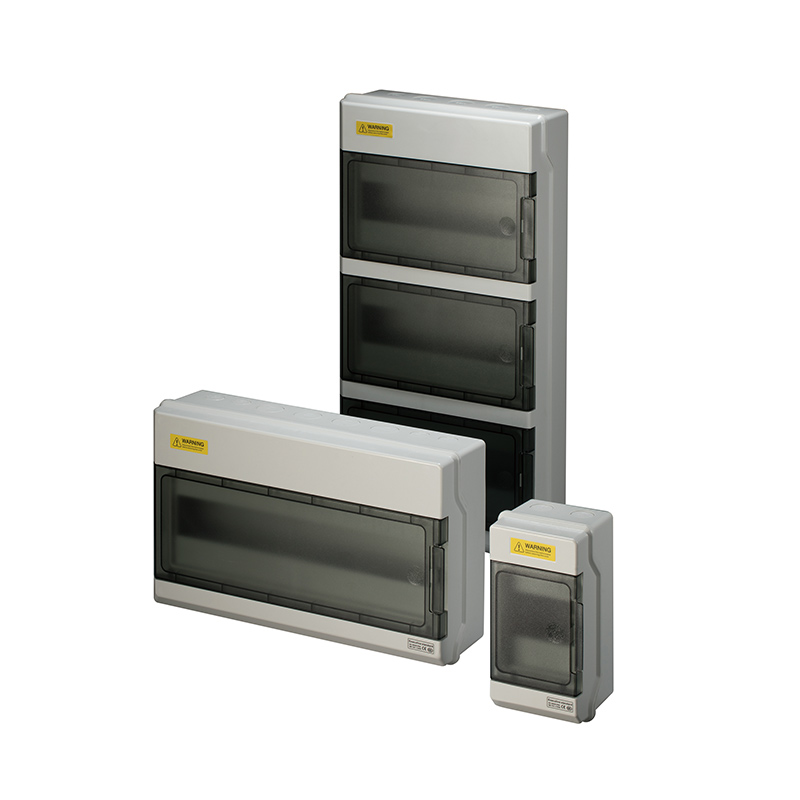
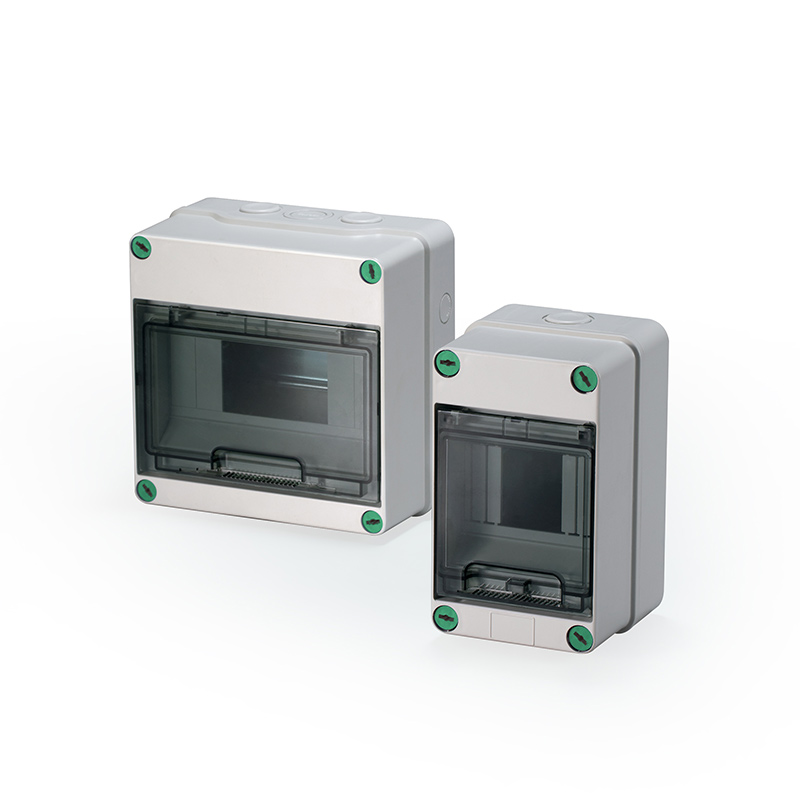
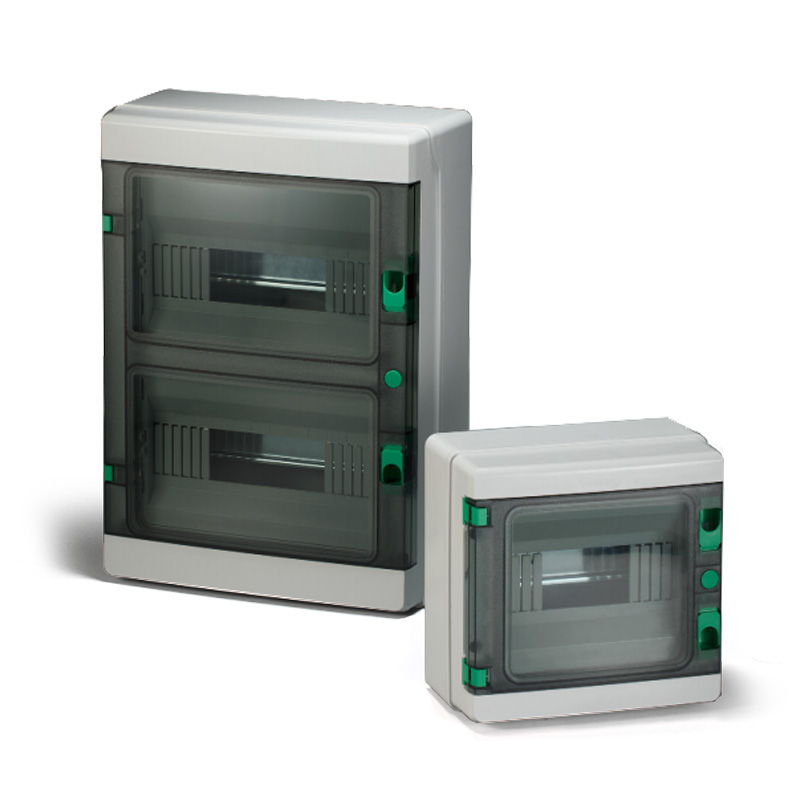
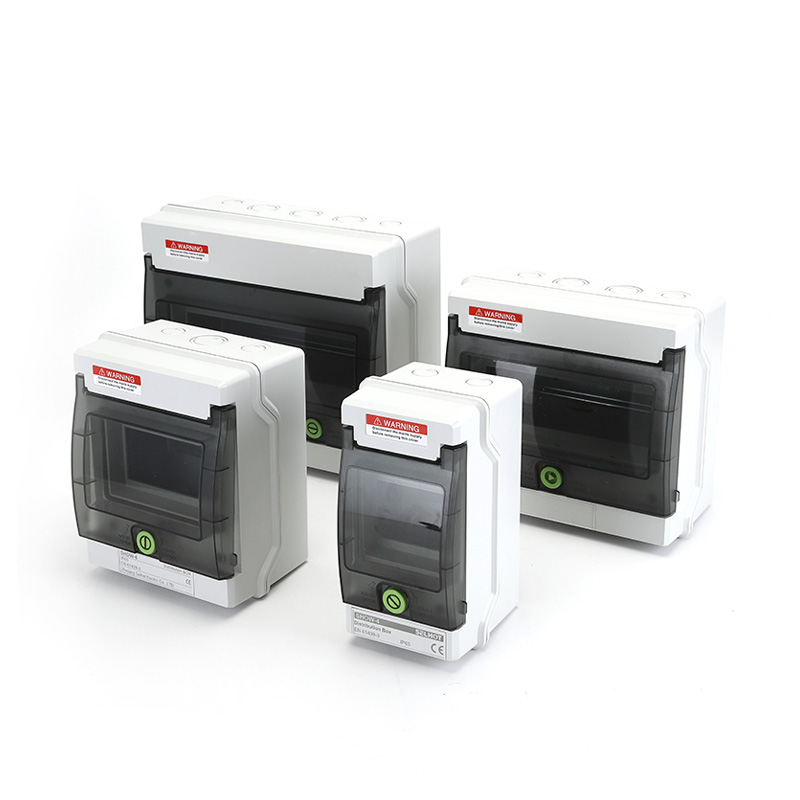
Comparison insight: Many manufacturers offer IP65 enclosures in both PC and ABS variants. For example, Selhot's ABS distribution box is favored for cost-sensitive projects, while their PC-based distribution boxes are specified for direct sunlight exposure. Hypothetical evaluation: A wastewater treatment facility choosing between PC and ABS should consider exposure to hydrogen sulfide gas, which accelerates ABS degradation. In such cases, metal or PC is safer despite higher upfront cost.
Decision checkpoint: Request material datasheets for UV resistance (ASTM D2565), UL 94 flammability, and chemical resistance. Never assume all IP65 plastic enclosures are identical.
IP65 enclosures come in two primary body designs: clamshell (top and bottom halves that separate completely) and hinged (one side fixed, door swings open). The choice directly impacts installation, wiring access, and long-term maintenance.
Comparison criteria:
Example scenario: A telecom tower using a distribution box for power feeds rarely needs re-entry after commissioning. A clamshell IP65 box is more cost-effective and seal-reliable. In contrast, a machine control panel that requires periodic diagnostics benefits from a hinged design with a transparent door.
Decision checkpoint: Map out the enclosure lifecycle—how many times will it be opened per year? Who will open it? What tools are available? This determines the optimal design.
Not all IP65 labels are created equal. Some manufacturers self-declare ratings without third-party testing, while others invest in independent lab certification (e.g., UL 50E, IEC 60529, or TÜV). For critical infrastructure or safety-related applications, buyers must verify the actual testing scope.
What to look for in compliance documentation:
Selhot, for example, provides certifications for their enclosures and switches, which allows buyers to trace compliance. Risk case: A buyer once selected a low-cost IP65 junction box from an uncertified supplier for a marine environment. After six months, the gasket hardened and allowed moisture ingress due to UV exposure—despite still meeting the initial IP65 test. This scenario highlights the need for ongoing verification.
Decision checkpoint: Ask suppliers for test reports that include preconditioning (e.g., heat aging, UV exposure). If they cannot provide, require a sample for your own IP65 verification in your worst-case conditions. For high criticality, specify enclosures with third-party marks only.
No. IP65 alone does not provide explosion-proof protection. Hazardous locations require ATEX, IECEx, or UL hazardous area ratings (e.g., Class I Division 2). IP65 may be a supplementary requirement, but never a substitute for Ex certification.
The IP65 rating applies only when the enclosure is fully assembled with all intended cable glands, connectors, and blanking plugs. Buyers should verify that the supplier includes appropriate IP65 gland plates or use approved entry systems. Field modifications (e.g., drilling extra holes) void the rating unless relabeled after testing.
In most climates, yes, provided the enclosure material is UV-stable (PC or metal) and the gasket is silicone or EPDM. However, if the box faces high humidity and temperature swings, internal condensation can occur even without water entry. Consider adding a breather drain or specifying an IP65 enclosure with a Gore vent to equalize pressure while maintaining the rating.
Selecting the right IP65 enclosure—whether a distribution box, junction box, or isolation switch—requires analyzing not just the protection level, but also material, design, and certification depth. Use the following checklist to guide your evaluation:
By comparing these dimensions objectively, procurement teams and engineers can avoid the common pitfalls that turn an IP65 label into a field failure. For further reference on compatible components, explore the industrial plugs and sockets and isolation switches that match your chosen enclosure system.