English
 中文
中文 Русский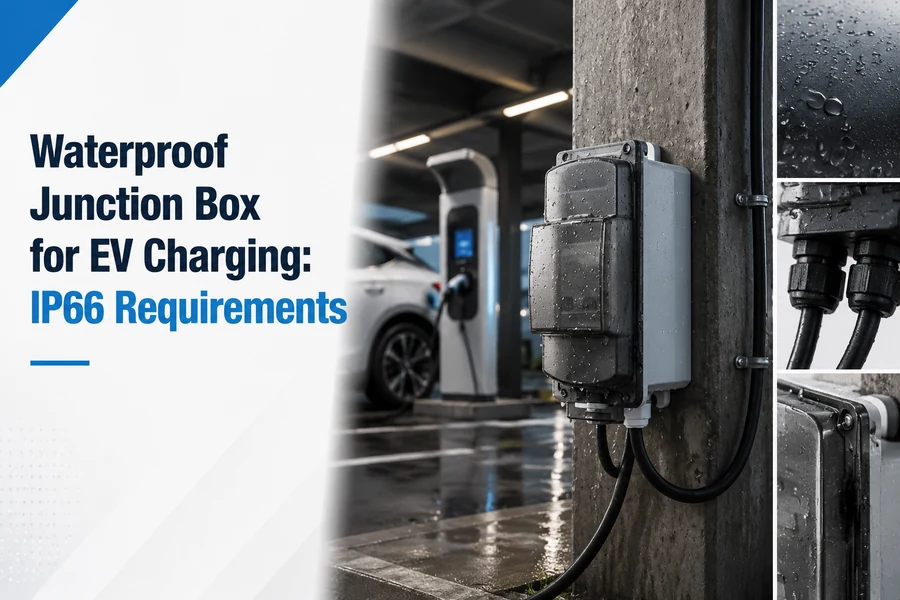
Aug 14, 2026

Article Overview: This article provides a structured procurement checklist for sealing solutions—whether for electrical enclosures, junction boxes, distribution boxes, or isolation switches—written specifically for buyers and procurement professionals. It covers essential procurement checkpoints, supplier evaluation criteria, cost-risk tradeoffs, implementation outcomes, and clear next-step actions to support purchase conversion decisions. The content remains neutral and buyer-oriented, relying on market evidence and hypothetical scenarios to guide decision-making.
Sealing is a critical yet often underestimated component in electrical and industrial applications. Whether used in distribution boxes, junction boxes, or isolation switches, the correct seal ensures protection against ingress of dust, moisture, and other contaminants, directly affecting equipment longevity, safety, and operational continuity. For procurement professionals, the challenge lies not only in selecting a sealing solution that meets technical specifications but also in balancing cost, supplier reliability, and long-term performance. This article provides a systematic procurement checklist that helps buyers evaluate sealing products from multiple dimensions—technical fit, supplier capability, cost implications, and risk exposure—so that purchase decisions are data-driven and aligned with business objectives.

When procuring sealing solutions for industrial or electrical applications, buyers must address several critical checkpoints before issuing an RFQ or making a purchase. These checkpoints serve as a practical filter to reduce selection risk and ensure alignment with application requirements.
The first checkpoint is to determine the environmental conditions the seal will face. For example, outdoor installations require seals rated for moisture (IP66 or higher), whereas dusty factory floors may need additional protection (IP67). Buyers should document the specific IP rating required and verify that the supplier’s product line offers conforming options. Check if the seal material is compatible with chemicals, UV exposure, or extreme temperatures in the application environment.
Sealing materials vary widely—silicone, rubber, foam, or specialized polymers. Each has tradeoffs in cost, lifespan, compression set, and temperature range. Procurement teams should request material data sheets and, if necessary, test samples under simulated conditions. Additionally, check if the supplier’s materials comply with relevant industry standards such as UL, IEC, or ISO. This checkpoint reduces the risk of premature seal failure.
Seals must fit precisely into the designated groove or housing. Even minor dimensional deviations can compromise sealing performance. Request dimensional tolerance reports from suppliers and consider performing incoming quality checks. For high-volume procurement, statistical process control (SPC) data from the supplier can be a key evaluation metric.
Seals can degrade over time due to material aging. Buyers should inquire about packaging methods (e.g., vacuum sealing, moisture barrier) and recommended shelf life. This is particularly important when stockholding longer-term inventory. Ensure the supplier provides clear storage guidelines and batch traceability.
Depending on the end market, seals may need to meet RoHS, REACH, UL 94 flammability, or other regional standards. Buyers must cross-check these requirements early to avoid compliance surprises later. Request copies of current certificates and verify validity through official registries if possible.
Internal link: For more details on product categories, see the Product overview page.

Supplier evaluation is a cornerstone of successful procurement. For sealing solutions, buyers should assess suppliers beyond initial pricing, focusing on aspects that affect long-term supply stability and product consistency.
Does the supplier operate under ISO 9001, IATF 16949, or other recognized QMS? A certified QMS indicates systematic quality control, from raw material inspection to final product testing. Buyers can request a QMS audit report or conduct a site visit. For sealing products, process control in molding, curing, and trimming is directly correlated with performance.
Reliable suppliers should have in-house testing for compression set, hardness, tensile strength, and seal integrity. Ask for batch-level test reports and how they handle non-conforming lots. Transparency in data (e.g., CPk values for critical dimensions) is a strong signal of supplier maturity.
Sealing materials may come from specialized raw material suppliers. Evaluate the supplier’s supply chain—do they have multiple sources for raw materials? What are typical lead times, and how do they manage demand fluctuations? Buyers should also inquire about emergency production capacity.
Unit price is only one element. Consider tooling costs, minimum order quantities, packaging costs, and potential rejects. A lower unit price may lead to higher scrap rates or shorter seal life, increasing TCO. Request a total cost breakdown and compare across multiple suppliers.
Hypothetical company A offers a seal at $0.15/unit with a lead time of 4 weeks but no batch test data. Company B offers at $0.22/unit with full test reports, ISO 9001 certification, and 2-week lead time. For a critical outdoor application, the slightly higher upfront cost of company B may be justified by reduced downtime and failure risk.
For more on quality assurance, visit the Quality Control page.
Every procurement decision involves balancing cost with risk. In sealing, three common tradeoffs merit attention.
Low-cost materials (e.g., generic rubber) may work in mild environments but degrade faster under UV or heat. Investments in higher-grade silicone or EPDM can extend life and reduce replacement frequency. Buyers should compute cost per year of service rather than initial unit price. A seal lasting 5 years at $1.00/unit is cheaper than a $0.50 seal needing replacement every year.
Requesting samples and conducting verification testing adds upfront cost and time but reduces the risk of field failures. For applications where seal failure causes production stoppage or safety hazards, this investment is prudent. Conversely, for low‑criticality applications, a basic compliance check may suffice.
Overseas suppliers often offer lower unit costs but longer lead times and higher logistics risk (customs, currency fluctuations). Local suppliers may charge more but provide faster response and lower inventory requirements. A dual‑sourcing strategy—one local, one overseas—can mitigate risk.
Large volume commitments reduce per-unit cost but lock inventory and increase exposure to demand changes. Buyers should negotiate volume breaks with flexibility clauses (e.g., 20% upward/downward adjustments) to balance cost savings with demand uncertainty.
For related enclosure products, see the Junction Box page.
Once a sealing solution and supplier are selected, the focus shifts to implementation outcomes—ensuring the product performs as expected and the procurement process delivers business value.
Before mass production, conduct first article inspection to confirm dimensions, material properties, and seal integrity. Document acceptance criteria and communicate clearly to the supplier. If results deviate, work with the supplier on corrective actions before authorizing full production.
Implement periodic sampling and testing of production batches. Tracking metrics such as defect rates, dimensional drift, and compression set over time helps identify process issues early. This is especially important when the supplier changes raw material sources or production processes.
Share field feedback with the supplier to drive improvements. For example, if a seal shows compression set after one year in a specific application, the supplier may adjust the compound formulation. Build a partnership approach rather than transactional relationship.
For further guidance on isolating switches, visit Isolation Switch page.
Q1: What is the most important factor when procuring sealing solutions?
The most important factor is matching the seal specification to the operating environment (temperature, moisture, chemicals, UV). Without proper material and IP rating, even the cheapest seal will fail, increasing total cost.
Q2: How can I compare suppliers fairly on quality?
Request batch test reports for key parameters (compression set, hardness, dimensions) and certifications (ISO 9001, UL). Also ask for references from similar applications. A transparent supplier will provide data freely.
Q3: Should I always choose the lowest unit price?
No. Lower price often correlates with lower quality control, shorter lifespan, or hidden costs (e.g., higher scrap, more frequent replacements). Evaluate total cost over the intended service life.
Q4: How many samples should I test?
At least 10-30 units per size, depending on volume and criticality. For high‑reliability applications, statistical sampling (e.g., AQL 0.65) is recommended.
Q5: What are the typical lead times for custom sealing products?
Custom seals usually require 4-8 weeks for tooling and first production, depending on complexity. Standard products can be 2-4 weeks. Always confirm with the supplier.
Q6: How can I reduce risk of supply disruption?
Qualify at least two suppliers, one primary and one backup. Maintain safety stock for critical seals, and include force majeure clauses in contracts.
Sealing procurement is a multi‑faceted decision that directly impacts equipment reliability, maintenance costs, and operational safety. By following a structured checklist—covering application requirements, supplier evaluation, cost‑risk tradeoffs, and implementation steps—buyers can make informed decisions that balance cost and performance. The key is to invest time upfront in verification and supplier qualification, use total cost of ownership as the decision metric, and maintain collaboration with suppliers for continuous improvement. Take the next step: prepare your RFQ using the checklist outlined in this article and engage with suppliers that demonstrate transparency, quality, and supply chain resilience.